

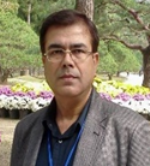
Currently affiliated to the Nepal Squash Racket Association (NSRA), a squash academy at Satdobato, Thapa instructs squash to young budding talents. Recently, in the 2nd NSRA Open Squash Tournament held in August, Thapa was defeated by his own son.[break]
Ashish Dhakal met with Thapa to talk about his career and journey in the squash scene in Nepal.
How did you become involved in squash?
I come from the countryside where back then we had no access to information about various forms of sports. When I came to Kathmandu in 1988, a cousin told me about squash. He took me to a club where people could become members and play the game. For someone like me who was a newbie in the capital, squash was very fascinating. I immediately joined the club where I learnt more about this sport.
During that time, sports were not considered a wise choice as a profession. What motivated you to challenge that belief?
Indeed, sport is still not considered a good choice as a profession. But while I was at the club, I had been training myself for months and I was really interested in this game.
Then I started instructing locals and kids at the club while continuing to play at the same time. At that time, I was unaware of any squash tournaments. Gradually, as I knew about the competitions, I started participating and was able to win in some of the games as well.
And just as the saying goes, “When you do something with sheer interest with all your heart, there blooms a strange affection in you for that thing,” I just couldn’t leave squash after being with it for such a long time.
How did your family respond to your decision to dedicate yourself to squash?
As I said earlier, I come from a village where we had no access to information of any sorts, and my parents knew nothing of the game. In fact, they didn’t even know for sometime that I was playing squash and doing pretty good at it, too.
At first, of course, they were quite skeptical. They wanted to know more about it and be convinced that playing squash wouldn’t be bad for me. Later, they felt that squash was indeed a very good game and supported me in pursuing my career in this field.
How has your two-decades-long journey in squash been like?
I started with being a club member, and today I’m affiliated to the Nepal Squash Academy. The journey was indeed not all smooth, as there were highs and lows of life too. But overall, I’m very pleased with what I’ve accomplished in this field and I’m happy with what has become of me today. I was able to make my name in squash and represent the country, too. And this is indeed a matter of pride.
Also, through squash, I was able to find something that I really loved doing. And at the same time, I was able to teach youngsters something I knew well and help in promoting squash among Nepalis.
At first, in the club, it was all money-oriented. But now at the academy, we’re promoting the game, and I feel very happy to be a part of this. We’re instructing young kids as well as older people. We are also conducting free trainings for those who are interested. It’s like giving back to squash after all that it has made me.
Recently, in the 2nd NSRA National Open Squash Tournament, you were defeated by your own son. How was the experience?
I’ve been frequently asked that question these days. The thing is, I’m really happy that my son won over me. For a teacher, nothing’s a bigger achievement than being defeated by his own student. It shows the intensity of the efforts that he has put in and the hard work that he has done in winning over his teacher, and that’s a good thing.
Furthermore, in a game, there’s nothing such as father or a teacher; it is pure competition, and coming out victorious against anyone is a great accomplishment for any player. And I’m happy for my son, too.
What do you think of the scope of squash in Nepal?
At present, I won’t say that squash is very prospective in the context of Nepal. Not many people know about the game and there are still loads to be done for its promotion. But, of course, if people are passionate about the game, the scope is really bright.
Right now, squash in Nepal is in its budding state. There’s not been much media attention to the game. In fact, only during the recent 2nd NSRA National Open Squash Tournament did we manage to garner huge media coverage. And I believe it’s very crucial that there be enough media attention for squash to be promoted at a larger scale.
What would you like to say to encourage people to be more enthusiastic about squash?
People think squash is an expensive game but as a matter of fact, it’s not even 10% of what golf or tennis or badminton cost. The equipments required are very economical. The only thing difficult is to make the court, but after that it’s nothing.
Also, the fact that squash is an individual game makes it even more special. One can show his full potential without having to worry if his teammate may do something wrong.
So, all in all, squash is a very good game for those who are interested in it and want to try it. In the context of our country, squash needs a bigger limelight than it’s getting at present. We need everybody’s support from all sides to promote this game and make people aware of it.
Related story
Zucchini or summer squash makes for a colorful pasta dish











-1200x560-1779450784.webp)