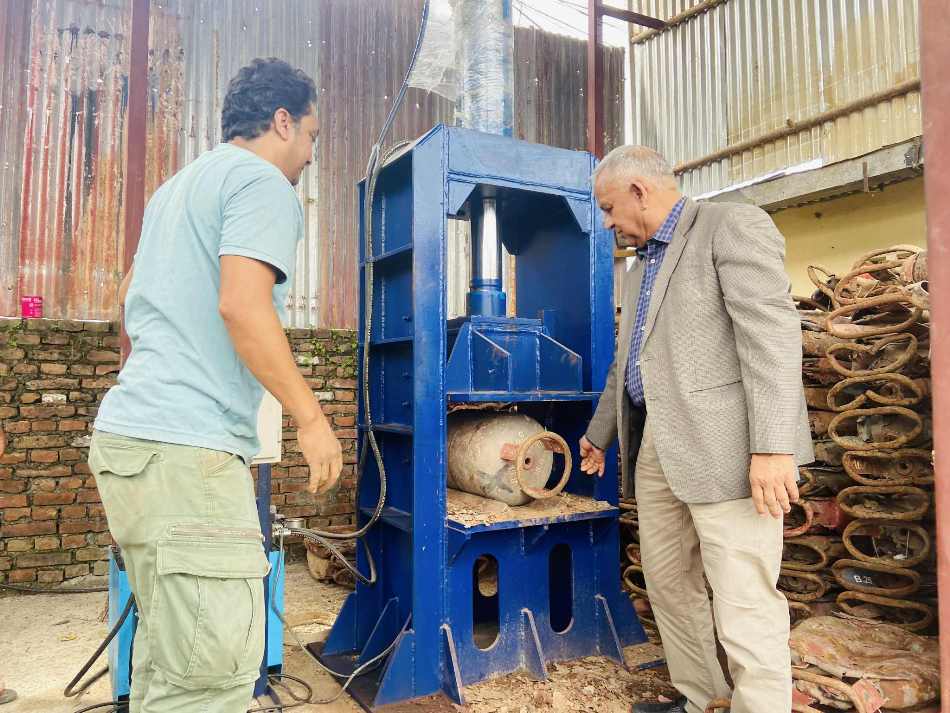
Artificial LPG shortage
Trial to convert green hydrogen gas into cooking gas successful...

As always, at a time of crisis, it is the people clinging to the bottom rungs of the economic ladder who are suffering the most. In the wake of the Indian economic blockade, the prices of daily edibles like vegetables and cooking oil have rocketed. They are being sold at least twice the normal price, if they are at all available in the market. Take the example of cooking gas. Over the past one month there has been an acute shortage of LPG gas cylinders in all the major markets in Nepal. But not for people who were ready to fork out (the current going rate) of Rs 10,000 for a cylinder of LPG which otherwise costs just Rs 1,400. This is the reason even the limited amount of LPG imported from India quickly disappears. This travesty of justice was repeated on Saturday when thousands of consumers who had been queuing up for cooking gas since early hours were turned away empty handed. They were justifiably aggrieved. On Friday all the big gas industries had announced that they would distribute half-filled LPG cylinders through their depots on Saturday.
If the government fails to check such blatant cheating, public anger will slowly rise. Already, there have been instances of fisticuffs as people have tried to outmuscle one another to get their hands on an LPG cylinder or to secure a couple of liters of petrol from the mobbed petrol stations. Still, by and large, Nepali people have thus far shown great patience, for they believe that India is behind the acute shortage of essentials and the resulting price rise. But they are starting to find, to their great shock, it’s not all India’s doing and their own government may be complicit. This loss of faith in a democratically elected government could in turn have all kinds of undesirable consequences, which is perhaps exactly what the blockade enforcers want. This dangerous slide in public confidence must be halted. But in the three weeks since its election, the KP Oli government, we are sorry to say, has done nothing substantial for the benefit of the common man.