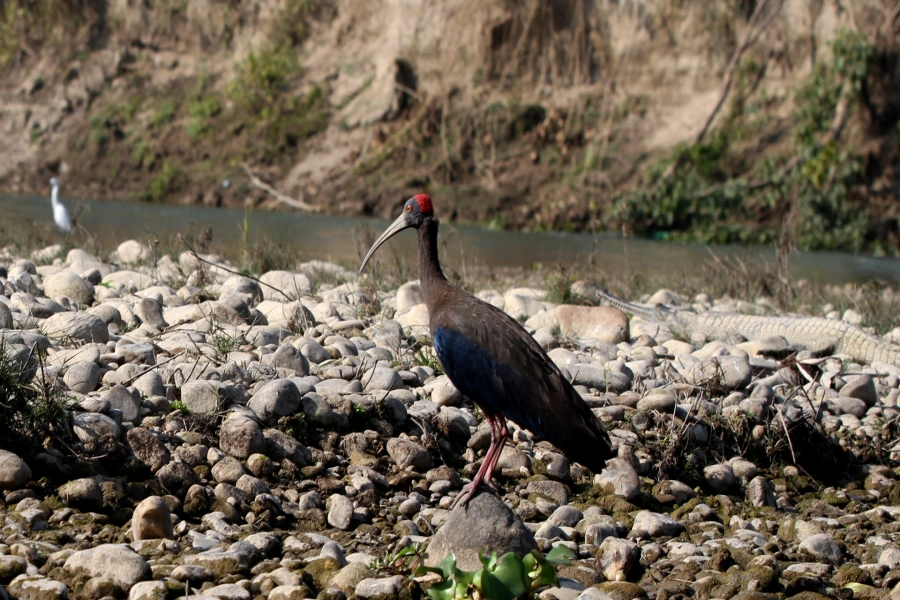
The Himalayan wetlands include lowland, highland, and glacial lakes; marshes, peatlands (humus with over 90 percent water), and wet grasslands and streams and rivers. The high altitude wetlands found above 3,000 m and are considered a special category.
The Himalayan wetlands are central to our lives, cultures, and belief systems; they important for their biodiversity; and especially as a natural way of storing freshwater.
Wetlands lie at the headwaters and all along the ten major rivers of the Hindu Kush-Himalayan region. As with glaciers, wetlands store water that falls in the form of rain and snow and release it slowly to the rivers during the dry season. These rivers link various ecosystems from upstream to downstream.
Ecosystem services The wetlands provide many services to the ecosystem, often summarised in three types of use: Direct, indirect, and non-consumptive. Direct use includes provision of freshwater, food, fuelwood, fodder, herbs, and fiber. The indirect uses include the storage and purification of water; retention of sediments, nutrients, and pollutants; and the mitigation of water hazards such as flash floods, lake outbursts, and land erosion. Finally the non-consumptive uses include such things as tourism, education, research, biodiversity, gene pools, culture, and spiritual and religious values. The wetlands play an important role in the cultural diversity of the region and are associated with a wealth of indigenous knowledge.
Overall status The Ramsar Convention lists 48 Ramsar sites in high-altitude areas across the globe, 29 of them in the Hindu Kush-Himalayan region, nearly a third of the 92 Ramsar sites in the Hindu Kush-Himalayas. The area is home to many globally threatened fauna such as the snow leopard, musk deer, Himalayan thar, ruddy shelduck, bar-headed goose, and many medicinal and aromatic plants. The wetlands of the Tibetan Plateau, Bhutan and others are essential habitat for the globally threatened black-necked crane.
The Himalayan wetlands are an important, often overlooked and poorly understood, component of our mountain ecosystems. Degradation of these critical ecosystems can impact the entire river system upstream and downstream affecting millions of people. Very little is known about the status of permafrost, peatlands, and meadows, or even of the larger bodies of water. Overall, there is a marked lack of data and information on the factors that link to the water cycle, and the health of wetlands, with the Himalayas considered to be a ‘hydrological black box’ in the global hydrological cycle.
Natural processes are constantly at work in our mountain landscapes, and they are constantly being shaped and reshaped. The process is expedited by drivers such as environmental factors, human actions, and climate change. Dynamic interactions render the Himalayan wetlands extremely vulnerable to a wide range of human and environmentally-driven threats. Overgrazing, water diversion for agriculture and human use, pollution, spread of infectious diseases, increase in rodent populations, growth of unpalatable grasses, and tourism activities are all affecting the wetlands.
Conservation efforts Efforts are underway to address the issues of the mountain wetlands in the Hindu Kush-Himalayas. One endeavour, the Himalayan Wetlands Initiative, deserves a special mention. The initiative is being promoted for endorsement by the contracting parties to the Ramsar Convention in the region. International Centre for Integrated Mountain Development (ICIMOD), in cooperation with the Ramsar Convention, IUCN, WWF, and Wetlands International is promoting the initiative. ICIMOD is also actively engaged in promoting dialogue, networking, collaboration, and exchange of information on the Himalayan wetlands.
The following actions are needed to gather the necessary basic information and deal with the factors causing degradation of wetland services in the Himalayas: Preparation of an inventory of wetlands of regional importance with basic information; making sure that wetlands are on the national conservation agenda; and demonstration projects for global monitoring of climate variability, environmental change, and human actions.
Related story
World Wetlands Day being observed today