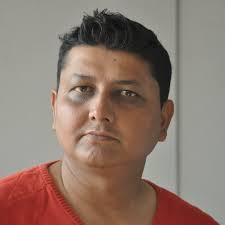
Excerpts:
Myrepublica.com: What is the purpose of your visit to Nepal this time?
Lee: I am here at the invitation of the International Institute for the rights of the child and the Creating Possibilities Nepal (CPN). I also plan to use this opportunity to make some observations for the advancement of child rights and march specifically towards inclusion of the chapter of children’s fundamental rights in the new constitution.
Myrepublica.com: Have you had any formal meetings with political leaders and lawmakers for raising the issue of child rights in the face of drafting the new constitution?
Lee: Yes, I met with the chairperson of the Constituent Assembly (CA), Subash Chandra Nembang, the chairperson of the constitutional committee in CA, Nilambar Acharya, and members of the CA committee on the fundamental rights and directives. We also met with Prime Minister Madhav Nepal, chairman of the main opposition party the UCPN (Maoists), Pushpa Kamal Dahal, among others.
Myrepublica.com: What role do you expect political leaders and lawmakers to play to ensure inclusion of child rights in the new constitution?
Lee: I am very encouraged by Nepal’s political development. I expect that political leaders and lawmakers will finalize the new constitution and have it approved by the Constituent Assembly (CA) on time. I am hopeful that the new constitution will include a chapter on child rights. I would like to emphasize the fact that the basis of creating a constitution is international human rights. I can assure you that this will be a historical moment, not just for Nepal but other parts of the world as well. The entire world will have an example that this sort of participatory, transparent and inclusive constitution can also be written.
Myrepublica.com: How child friendly do you expect the new constitution to be?
Lee: Some drafts and proposals concerning child rights put forward by civil society groups have already been incorporated into the current draft of the constitution. But there are still some more rooms for making children’ voices heard. I cannot make final assessment at this moment.
"I am hopeful that the new constitution will include a chapter on child rights."
Myrepublica.com: Can you come up with some points that must be incorporated into Nepal’s new constitution for making it sensitive to children’s issues?
Zermatten: Our institute has recruited some students to make analysis of a number of constitutions in different parts of the world. It was to examine the main trends, or say important elements, in different constitutions. Having analyzed 49 constitutions, we can say there are various principals. To summarize, what is very important, according to international laws, according also to observations made by the UN committee, which monitors the child’s rights convention, is to add four general principals of child rights into the constitution. Besides, rights of children to express their views in decision making are also important though it is very challenging.
Myrepublica.com: In your view, how much progress has Nepal made as far as ensuring child rights is concerned since it signed the Child Rights Convention (CRC) 1990?
Lee: I was a member of the UN Committee on the Childs Rights (UNCRC) when Nepal submitted the first review report of the progress on implementation of the convention. Nepal has already submitted the second review report. Nepal has of course progressed between times of the first and second review reports. It is obvious that no country can always fulfill all the recommendations mentioned in the report. What the major breakthrough in Nepal is that a chapter of the child rights has been incorporated into the preliminary draft of the new constitution. This is, of course, not the end of things. Nepal needs to do a lot more after the finalization of the new constitution.
Myrepublica.com: Where does Nepal stand in South Asia as far as implementation of CRC is concerned?
Lee: I do not like to compare. It is not my mandate, either. There should be no comparisons among countries because there are so many differences even within the same region. However, I would say that Nepal has made some improvements.
Myrepublica.com: Has the decade-long war in Nepal hampered efforts to implement CRC?
Lee: Yes, the deadly conflict has really hampered Nepal’s efforts in ensuring child rights as it does in any other parts of the world. In a state of an internal conflict, child rights is always pushed back. But I am encouraged that Nepal has moved forward with the peace process and making of the new constitution will help a lot.
Myrepublica.com: The Maoist war is over and the former child soldiers are likely to get a new lease of life, yet there are media reports that suggest some armed groups in the troubled Tarai region of Nepal are conscripting children. What is your role in the wake of this new threat to child rights in Nepal?
Lee: CRC has two optional protocols, one on armed conflict and another on child prostitution and pornography. We are waiting for the initial report of optional protocol on armed conflict. On top of that, there is a Security Council Resolution 1612 which monitors the use of children in an armed conflict by all actors. We will act in line with the convention.
Myrepublica.com: What do you think are the biggest threats facing Nepal´s children?
Lee: The biggest threats to the child rights are abuse, exploitation and labor. In Nepal’s context, the lack of proper birth registration system is also a threat to the child rights. It is because if you do not have proper documentation of births of children, they can be recruited into armed groups in future.
Myrepublica.com: Even two decades after Nepal signed CRC, different forms of child labor are on the rise. Do you think that children should absolutely be barred from working irrespective of how poor their parents are?
Zermatten: There are different approaches to addressing the problem of child labor. We consider some forms of child labor in conditions wherein they can exercise their rights— rights to education for an instance—is acceptable. But if very young children are being forced to work and there is no possibility of going to school then it is the worst from of child labor. This is, and should be, absolutely prohibited.
Myrepublica.com: How can we ensure child rights in Nepal where still a large population is below the poverty line?
Lee: Poverty is obviously one of the major hindrances in ensuring the child rights. But this should not be an excuse. Yes, it can be a reason, but not an excuse at all. International donor agencies have been assisting poor countries to make sure that poverty will not be a reason for showing indifference towards the child rights. For this the proper use of the fund provided by international donor agencies is very crucial. There are allegations of misuse of fund in Nepal. And donor agencies at times focus too much on one issue, neglecting other equally important ones. These shortcomings need to be sorted out to overcome the problem of poverty.
Myrepublica.com: A major portion of financial assistance provided by donor agencies to Nepal tends to be used only for making policies. Can CRC be absolutely implemented without all parents being able to feed and educate their children?
Lee: We are quite often confronted by this question. It is a very difficult question and a dilemma. I would say that it is the government’s ultimate responsibility to assist poor families to fulfill their parental responsibilities. I have had to face up to this very question many a time in countries where the only source of an entire family is a child. All I could say in response to this question is the government has to have a political will to make sure that children of poor parents are sent to schools. Education is the only solution to this serious dilemma. An earnest focus on universal education is required to make sure that all parents send their children to schools.
Related story
Poverty: A Multidimensional Problem, Nepalese Context


-1780813474.webp)