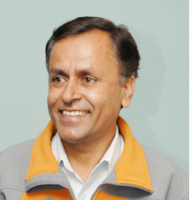
“Today’s agreement among the parties has ensured that the constitution will be promulgated from this Constituent Assembly. Yet there lie challenges ahead to codify the agreed points into constitutional language,” said Maoist Vice-chairman and Deputy Prime Minister Narayankaji Shrestha, following a meeting of top leaders of the major political parties and the Madhesi alliance on Tuesday. [break]
- Taskforce to put 3-party deal into writing
- Ethnic groups, Madhesi parties object to three-party agreement
- Pokharel to lead UML team
- Prez Summons House Meeting
Political leaders involved in negotiating the contentious issues told Republica that though they have resolved the disputes over federalism, system of governance, electoral system, citizenship and the judiciary, there are some technical issues yet to be settled.
Following are details of what has been agreed and what is yet to be settled.
Federalism
The parties have agreed to federalize the country into 11 provinces but have refrained from naming the provinces. As per the agreement, the provinces will have the power to take a final decision about their own names.

However, differences continue among political parties over a province comprising Jhapa, Sunsari and Morang districts, according to political leaders. Similarly, there is also dispute over which province Kanchanpur and Kailali districts should be incorporated into, although the parties have agreed to form a single province compromising the nine districts of the far western region.
Likewise, the parties differ over whether Nuwakot and Dhading should be the part of the province that includes Kathmandu. NC and the UML have argued that these two districts should be part of the province that includes the capital, Kathmandu, while the UCPN(Maoist) has argued that these districts should be part of the province comprising districts surrounding the capital.
Similarly, parties differ over the breaking off of parts of Syangja and Tanahun districts and making them parts of different provinces, according to the party leaders.
“The disputes over territory will be resolved by collecting public opinion and through the suggestions of a federal commission,” said a leader who participated in the meeting of top leaders of the major political parties and the United Democratic Madhesi Front.
System of governance
The parties have agreed to a mixed model of governance, with a directly elected president and a parliament-elected prime minister, with powers being shared between them. There will be supremacy of parliament and parliament can question the actions of the president.
As per the understanding among political parties, the president will enjoy some special powers. Under this provision, the president can direct the government to face a vote of confidence in parliament when necessary, according to one leader. The president will also have more say in regard to issues pertaining to the Nepal Army.

However, the parties are at odds over giving the president the powers to declare a state of emergency and dissolve parliament if he thinks fit. Similarly, the parties are also debating whether the president should be given the power to stall the programs and activities of the government if he thinks fit.
Judiciary
The parties have also settle their dispute over the judiciary and agreed to a separate constitutional court. According to the leaders, the constitutional court will have jurisdiction only to settle disputes between the center and the provinces, between one province and another, and between provinces and local bodies.
Such a court will have a five-member bench. While the chief justice will head the bench, the two seniormost justices and two other judges to be appointed upon the recommendation of the council of ministers will be its members. The parties have dropped the earlier insistance on the reappointment of judges. The incumbent judges will be retained but will have to take a fresh oath under the new constitution.
Citizenship
The new constitution will have provision to issue citizenship by descent through either father or mother, provide both father and mother are Nepali citizens. If the mother happens to be a non-Nepali, her children cannot obtain citizenship in her name. The leader told Republica that there will be a special provision for giving citizenship to children born to woman of badi community, born due to rape and forced prostitution.
However, the parties are yet to arrive at an agreement on giving citizenship to foreign nationals married to Nepali women. The parties are likely to leave this issue to be decided in citizenship law after the promulgation of the constitution.
System of election
There will be 376-member bi-cameral parliament at the center, including altogether 311 members in the house of representative. Among them, 171 members (55 percent) will be elected through the first past the post election system while 140 will be elected through proportional election system. According to sources, some quotas will be reserved for people below the absolute poverty line.
The upper house at the center will have 5 members each representing 11 states while ten members will be nominated by the president on recommendation of the Council of Ministers.
Similarly, there will be an assembly in each province. The number of members in assembly will be double the number of lawmakers elected from each provinces to the House of Representatives.
Dispute over amendable provision
The parties still at loggerhead over whether there should be an amendable provision in the new constitution, according to political leaders. The UCPN (M) has argued that all provisions in the constitution should be subject to amendment while the Nepali Congress and the CPN (UML) have demanded certain provisions should be termed as non amendable.
The Maoists have argued that if non amendable provisions were to be included in the constitution, such provisions should relate to only national sovereignty, national independence and republic. But NC and the CPN-UML have argued that such provision should relate to human rights and multiparty democracy as well.
Discussion on May 27 deadline
The top leaders of the major parties on Tuesday formally opened discussion on what should be done if they cannot promulgate the constitution by May 27. “As we could not find a way out, the leaders have committed to work day and night to complete the constitution and promulgate the constitution on May 27,” the leader told Republica, “We may require ten to 20 days more beyond May 27.”
Related story
Nepal and India should discuss all contentious issues including...