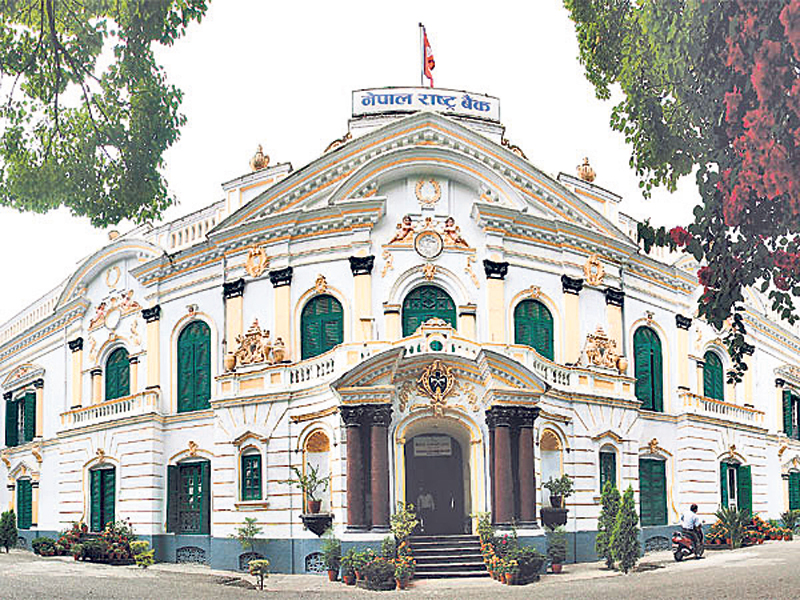
“We will work out a new mechanism to narrow down the spread rate,” said NRB Governor Dr Yuba Raj Khatiwada, unveiling the mid-term review report of Monetary Policy 2011/12 on Friday. He explained that the new mechanism would create an interest rate corridor, something which will outline a frame of deposit and lending rates, and seek BFIs to operate within that range.[break]
The mid-term review report too says that the new arrangement was necessary mainly because BFIs were setting cut in deposit rate as precondition for lowering lending rates, “whereas reality is they are operating with are too high spread rate” to serve general customers interest.
On the economic front, the mid-term review of Monetary Policy projected rosy picture of the economy and even raised targets the central bank set on major indicators.
For instance, the central bank, which in mid-July targeted to attain balance of payment (BoP) surplus of Rs 5 billion in 2011/12, has now set a target to maintain the surplus at Rs 40 billion. It has also projected the bank deposits to grow at the rate of 15 percent this year, up from its earlier target of 12 percent. The report also says the economy this year would grow by 5 percent as targeted by the government in the budget for this fiscal year.
However, the report paints grim picture for fronts like inflation. The central bank that initially targeted to contain inflation at 7 percent now says it will limit it at 8 percent. NRB has attributed rise in petroleum prices, among others, as reasons behind upward revision on the target.
Though the report lauds encouraging rise in deposits, which expanded by well over Rs 70 billion over the first six months of fiscal year 2011/12 and ended long running liquidity crisis, it says the central bank would fail to achieve the targeted credit growth.
NRB in July had targeted to expand credit by 13.7 percent, but mid-term review suggests it could grow by 13.3 percent only. The situation of commercial banks´ credit flow to the private sector is still dismal. The report shows that commercial banks´ credit to the private sector expanded by mere 3.2 percent over the first six months of the current fiscal year, whereas such credit had grown by 6.5 percent in the same period of last year.
“This is worrying situation,” said Dr Khatiwada, and urged the BFIs to work for the creation of credit demand and issue loans in the productive sectors like agriculture, hydropower, tourism and export-oriented industries. Nonetheless, Khatiwada promised BFIs that the central bank would, if required, mop up excess liquidity by resorting to outright sale of government securities that it holds.
The mid-term review also expresses wariness over adverse impact of the excess flow of loans by the BFIs in the real estate. “Banking and financial system as a whole is still vulnerable to crisis, particularly as asset bubble is yet to burst and real estate market is yet to correct,” reads the report.
Given such situation, the central bank said it has already taken steps to make early warning system effective and to formulate contingency plan for crisis management. “We will have the bank resolution framework, which will have steps of crisis management and ways to safeguard the system, readied by the end of this fiscal year,” reads the report.
As for loans issued to housing, the central bank said it would allow the BFIs to reschedule them.
Related story
Revised interest rate corridor system introduced