As per the existing provisions, a political party needs to prepare a list of candidates that includes women, dalits and the various ethnic, indigenous and marginalized communities. But this doesn"t apply to the political parties that field candidates in less than 30 percent of the electoral constituencies. They need to allocate seats only for women, but not for the marginalized communities.[break]
Lately, NC and UML leaders have been insisting that the same provisions be applied to all parties irrespective of the percentage of constituencies in which they field candidates.
NC Vice-president Ram Chandra Paudel is one of the leaders who have been lobbying strongly in favor of correcting the ´unequal´ provisions that were in force during the Constituent Assembly election in 2008.
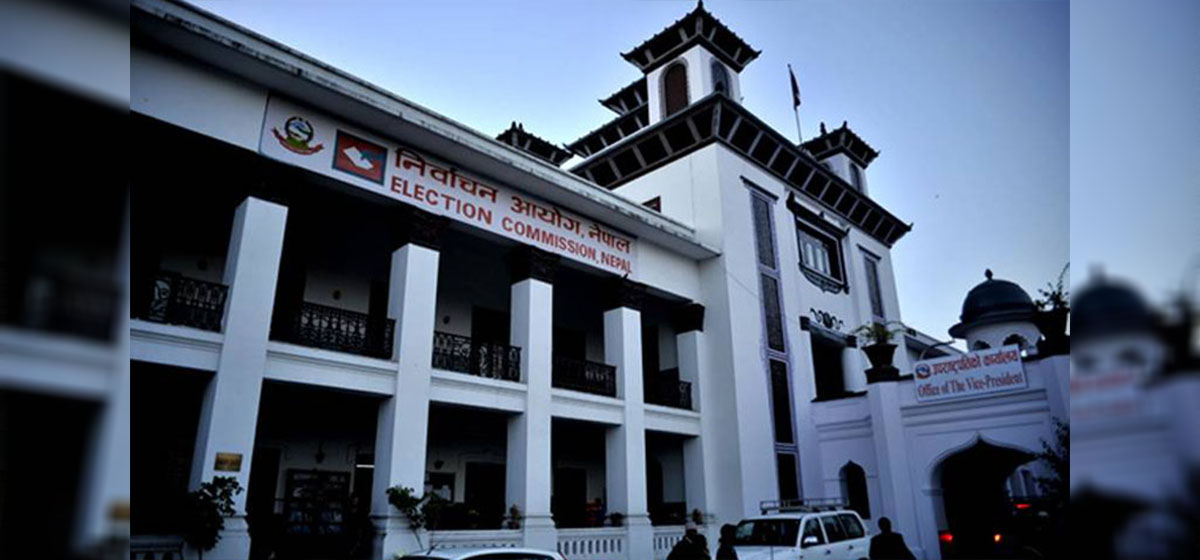
Addressing a gathering in Kathmandu on Friday, Paudel lauded Chief Election Commissioner Neel Kantha Uprety, who was on the same dais, for suggesting ´appropriate provisions´ to amend the election laws. But he criticized Uprety for not taking initiative to change the provision that gives ´special privilege´ to some Madhes-based parties and some other political parties.
´There are some Madhes-based and some other political parties that claim to be champions of the principle of inclusion. But they are against the provision requiring that a list of candidates include the marginalized and oppressed communities,´ said Paudel. ´The provision should be amended and an inclusive list of PR candidates should be made mandatory for those political parties as well.´
The election provisions make it mandatory for a political party to ensure that its list of candidates under the PR system includes all castes and communities. But back in 2008, the parties and the election commission had agreed to make this mandatory only for those parties that fielded candidates in over 30 percent of the total of 240 electoral constituencies. The agreement was reached mainly with the objective to persuading the then agitating Madhes-based parties to participate in the CA polls.
At that time, the Madhesi leaders had maintained that it would be unfair for them to be required to adhere to the provision as their constituencies fall only in Madhesi communities.
According to a senior official at the EC, the commission has opted not to make any changes to the provision, sensing that such a move might ignite further controversy among the major political parties.
´We decided to make minimum change to the existing provisions because we already have a tough time settling inter-party disputes on some of the new provisions that we have proposed this time,´ said the EC official. The major parties are sharply divided over whether or not to introduce new provisions on the threshold criteria, the downsizing of the 601-member CA and barring of candidates with criminal backgrounds.
NC and UML leaders have been arguing that it is the responsibility of all political parties to work as per the principle of inclusion.
CPN-UML"s Agni Kharel, a regular participant of inter-party negotiations, said that every party must be ready to prepare a PR list inclusive of all castes and communities. ´How can unequal criteria be acceptable for rival political parties?´ asked Kharel. ´It is amusing that some political parties want a provision that applies only to their rivals but not to themselves.´
However, Vice-chairman of Tarai-Madhes Democratic Party, Hridayesh Tripathi, accused the NC and UML leaders of creating unnecessary controversy with the intention of defering the upcoming elections. He argued that such a provision cannot be acceptable to the regional parties.
´What NC and UML leaders want is that if we win 10 seats in the Madhes-based constituencies, four of the seats should represent communities of hill origin,´ Tripathi told Republica. ´This is something we will never allow.´
Rival parties claim that the number of lawmakers from high-caste Madhesi communities such as the Yadavs and Jhas to be elected during the previous CA poll was dramatically high.
´It is due to the same faulty provision that there is very low representation in the Madhes-based parties of other communities even though there are several dalit and marginalized communities in the Tarai districts,´ said Paudel.
Related story
NRB flexes criteria on working capital loans, removes yearly ac...