

KATHMANDU, Jan 5: The Nepali Congress (NC) has decided to pursue an alliance strategy with major political parties for the upcoming National Assembly (NA) elections, signalling openness to broader electoral coordination.
A meeting of the party’s Central Working Committee (CWC) resolved to continue dialogue with political forces that hold electoral influence in the NA polls to explore possible cooperation.
Party spokesperson Dr Prakash Sharan Mahat said consultations are underway with all relevant parties and will continue in the coming days.
“We discussed the possibility of coordination after consulting parties that have influence in the National Assembly elections. Inter-party discussions will continue, and the CWC will meet again on Tuesday to take a final decision,” Mahat told journalists. He added that the party will finalise its candidates during Tuesday’s CWC meeting.
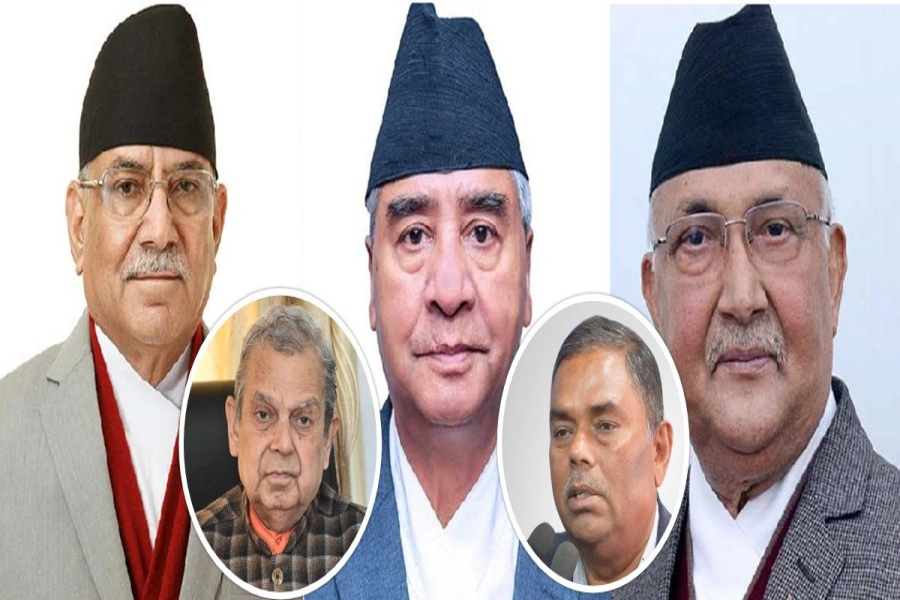
The NC decision comes amid parallel discussions among four major political forces—the NC, the CPN-UML, the erstwhile CPN (Maoist Centre), and the Madhesi Front, which includes the Democratic Socialist Party and the Janata Samajwadi Party-Nepal—ahead of the NA elections scheduled for January 25.
Thai embassy organizing "Journey to Thailand & Top Thai Brands...
According to party sources, talks among these forces have focused on possible electoral coordination, provincial seat-sharing arrangements, and candidate selection to strengthen their respective positions in the polls. A senior UML leader confirmed that discussions are ongoing but said the parties have not reached any agreement so far.
“Discussions are underway on whether the four forces can move forward together in the elections,” the leader said.
NC leader Krishna Prasad Sitaula also acknowledged that contesting the National Assembly elections alone could put the party at a disadvantage. However, he clarified that the ongoing talks are limited to the NA elections and do not extend to the House of Representatives (HoR) elections scheduled for March 5.
As negotiations intensify for the NA polls, the coming days are expected to be crucial in determining whether a broader alliance or issue-based coordination materialises. Sources said informal discussions and speculation over possible NC–UML coordination for the HoR elections have exposed sharp divisions within both parties.
According to sources, the talks have included hypothetical seat-sharing scenarios, though senior leaders from both sides have expressed doubts about their feasibility and political wisdom.
A senior UML leader warned that a pre-election alliance between the NC and UML could backfire. “If the Nepali Congress and UML contest the elections together, the parties are likely to lose public trust. Even bringing top leaders together cannot force voters,” the leader said. He added that denying tickets to party candidates in favour of alliance partners could alienate cadres and divert votes.
Leaders from both parties have also cautioned that such coordination would undermine democratic competition. “Elections are fought on ideology and manifestos. On what ideological basis would these two parties contest together?” an NC leader asked.
Discontent over potential seat-sharing arrangements is reportedly growing within both the NC and the UML, with leaders predicting strong internal resistance if established candidates are affected.


