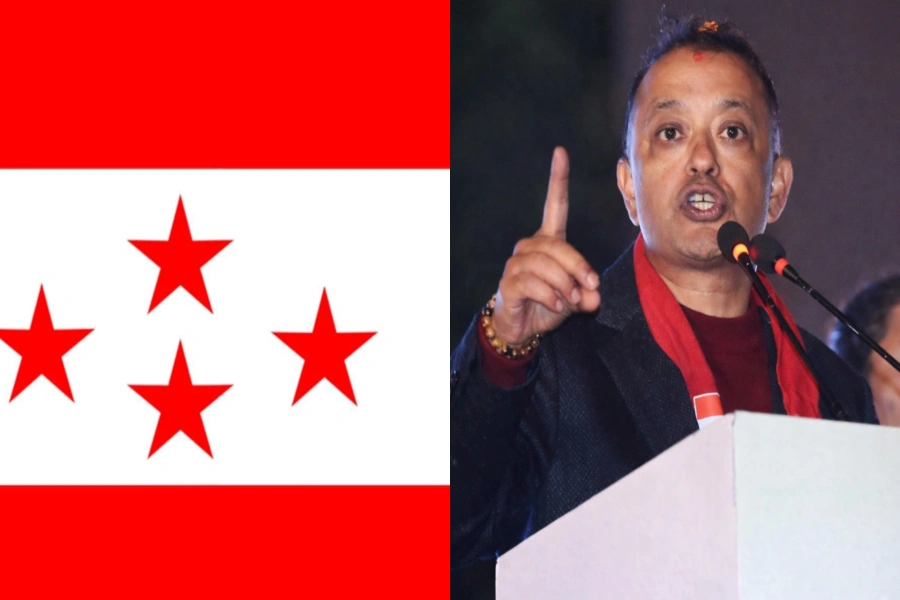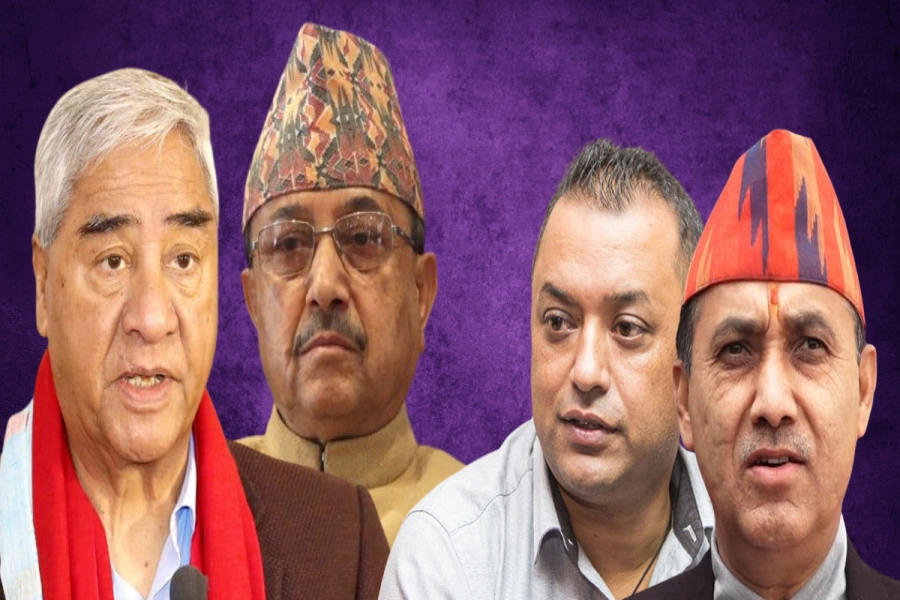
KATHMANDU, Jan 16: Nepali Congress (NC) led by President Gagan Thapa has drawn growing support from scholars, senior advocates and political analysts, regarding his leadership of the party, even as the legitimacy of his party rests with the Election Commission (EC).
The country’s oldest democratic party formally split into two rival factions on Wednesday, with Thapa’s group holding the Special General Convention with over 54 per cent participation of General Convention Representatives against the establishment camp led by President Sher Bahadur Deuba. The split came just days before the January 20 deadline for submitting First Past the Post (FPTP) candidates for the March 5 House of Representatives (HoR) election.
On Thursday, Thapa, accompanied by Vice President Bishwa Prakash Sharma, led newly elected party officials to the EC to update party records following the Special General Convention. Thapa formally sought the replacement of Sher Bahadur Deuba’s signature with his own in official documents, submitting papers stating that the convention dissolved the previous committee and elected new leadership.
After meeting Acting Chief Election Commissioner Ram Prasad Bhandari and other officials, Thapa said they were aware of the tight timeline for candidate nominations and expressed confidence that the updates would be completed by Saturday.
I will not tolerate questions about the party’s legitimacy: Cha...

Speaking to the media, Thapa stressed that the Special Convention was conducted in line with the party statute, which automatically dissolved the previous committee. “The decisions of the convention are supreme for the party, so there should be no doubts about official recognition,” he said.
Earlier, Thapa chaired his first Central Committee meeting in Kupondole, which endorsed the decision to notify the EC of leadership and signature changes and appointed Devaraj Chalise as party spokesperson.
Political analyst and professor Krishna Pokharel said the dispute within the party was largely driven by a long-delayed generational transition. He argued that the Special Convention was anchored in the backdrop of the September 8 and 9 Gen Z protests and was held in full compliance with the party statute.
“The demand for a Special Convention had legitimacy from the very beginning, as it crossed the 40 percent numerical threshold stipulated in the party statute,” Pokharel said. “There was no point of return after the demand for the Special Convention, as the Central Working Committee neither challenged its legitimacy nor offered viable alternatives to avoid it.”
Echoing Thapa and Sharma, he said the Special Convention became both a political necessity and a legal pathway rather than a rupture within the party.
Senior advocate Radhe Shyam Adhikari underscored that under the NC statute, the general convention—whether regular or special—remains the party’s supreme authority. Once all legal requirements to hold such a convention are met, its decisions are binding. Adhikari said the convention’s agenda of policy review and leadership accountability is strictly statutory, making its outcomes mandatory guiding principles for the party that should not be dismissed as informal or extra-constitutional.
The Deuba-led establishment faction continues to contest this interpretation, urging the EC not to recognise the Special Convention and insisting that the existing Central Working Committee represents the party.
The EC has acknowledged receipt of submissions from both sides and said it will examine documents, numerical claims and statutory compliance before reaching a decision.
Analysts note that the EC’s ruling will be decisive for electoral purposes, particularly regarding entitlement to the party’s ‘tree’ election symbol. They add that either faction has the right to seek judicial review if dissatisfied with the decision, a move that could push the dispute to the Supreme Court and extend uncertainty ahead of the March 5 election.
In such a scenario, Pokharel said the EC could allow time for the registration of a new party, citing special circumstances. “The EC should allow some time since the party has split under exceptional conditions, enabling the fulfilment of due processes that may have been disrupted by the split,” he said.