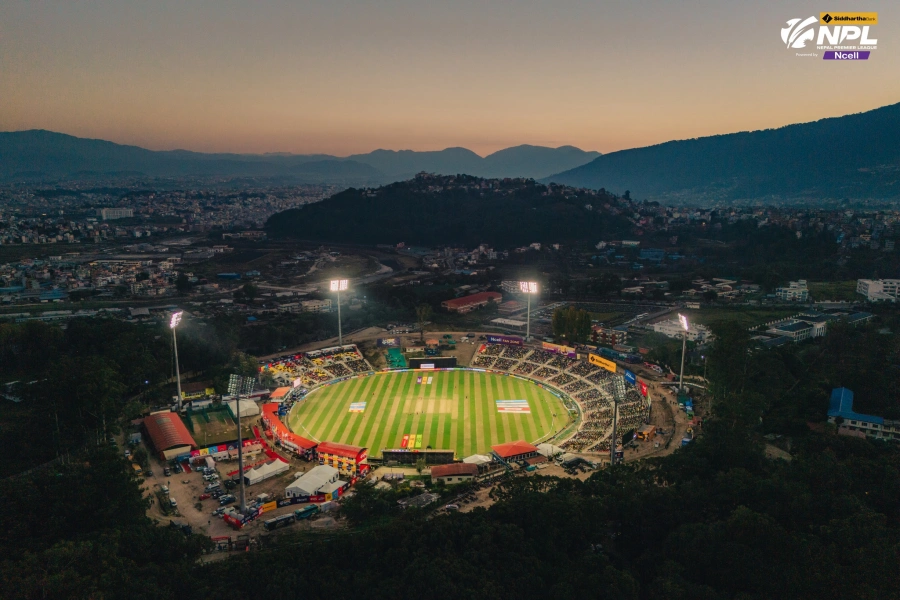
The sudden issuance of a 35-day ultimatum by Tribhuvan University (TU) to 18 organisations operating on its land has reignited a sensitive and far-reaching debate over the future of the Kirtipur Cricket Stadium. What might have otherwise remained a routine administrative notice has instead triggered widespread concern, speculation and public anxiety over whether Nepal’s most iconic cricket venue could face disruption at a time when it is finally emerging as a symbol of national sporting pride. This concern is neither exaggerated nor misplaced. The Kirtipur Stadium is not just another patch of leased land under bureaucratic negotiation. It has, over the past years, evolved into the heartbeat of Nepali cricket. With government investment of nearly Rs 100 million for infrastructure upgrades—including parapets and floodlights—and a broader master plan of around Rs 1 billion for future development, the stadium now stands as one of the most significant state-backed sports infrastructures in the country. It has already hosted the Nepal Premier League (NPL) Season 2 successfully and is currently a venue for ICC World Cup League 2 matches. At a time when Nepal is steadily carving its identity in international cricket, such infrastructure is not merely symbolic—it is strategic.
State to gain more than Rs 4 billion from Gokarna Forest Resort...

The legal and administrative complexity surrounding the ground is not new. The Cricket Association of Nepal (CAN) has operated the stadium under a long-term lease agreement with TU, originally set for 25 years and now nearing expiry. The ambiguity surrounding renewal has created uncertainty, amplified further by TU’s broader land recovery campaign targeting encroachments across its properties. However, equating a functioning national sports facility with encroached or illegally occupied land would be a category error. The Kirtipur Cricket Ground is not a case of unauthorised occupation; it is a state-negotiated, state-funded, and state-utilised asset serving a national purpose. The government itself has clarified this position. The Minister for Education, Science and Technology, who also oversees sports, has publicly stated that there is no intention to demolish or vacate the stadium. He has further confirmed that discussions between TU and the government have been positive, with a renewed lease agreement under preparation. Such assurances are critical, but they must now be translated into decisive administrative action. Equally important is the recognition that uncertainty itself is damaging. The issuance of ultimatums, however procedurally justified in a land management context, risks creating confusion that undermines investor confidence, disrupts sporting schedules, and fuels unnecessary public anxiety. Social media reactions in recent days reflect this sentiment clearly: citizens are not demanding demolition or clearance—they are demanding clarity, continuity, and commitment to national sporting infrastructure.
The CAN has rightly expressed confidence that the stadium will remain protected, noting that it is ultimately a state property belonging to players and the public. That perspective must guide policy decisions going forward. Institutions such as TU and CAN should not be viewed as competing stakeholders, but as complementary custodians of public assets with different mandates—academic and sporting—both serving national development. There is also a broader policy lesson here. Nepal’s sports infrastructure has historically suffered from fragmentation, short-term planning, and institutional overlaps. The Kirtipur Stadium represents a rare case where sustained investment, international engagement and domestic enthusiasm have converged successfully. To disrupt this trajectory now would not only waste financial investment but also weaken the momentum of Nepali cricket at a crucial stage of its development. The solution is neither complicated nor controversial: renew the lease, formalise long-term arrangements and establish a clear governance framework that respects TU’s institutional ownership while securing uninterrupted sporting use. If concerns exist regarding academic operations, they should be addressed through structured coordination—not abrupt administrative deadlines.