The two day conference, jointly organized by the International Rice Research Institute (IRRI), National Agricultural Research Council (NARC), USAID, Stress-Tolerant Rice for Africa and South Asia (STRASA), has also pointed out the need to make available the new varieties of rice that could withstand the adverse effects of drought and inundation, the consequences of the climate change.A total of 100 agriculture scientists, research scholars, seeds manufacturing companies from Nepal, India, Bangladesh, Cambodia, Philippines and America attended the conference where various 20 working papers on rice paddy research were presented and discussed.
Speaking on the occasion, Dr Bharatendra Mishra, member of the National Planning Commission shared that IRRI had provided some 20 tonnes of dry-seeded rice following the earthquake.
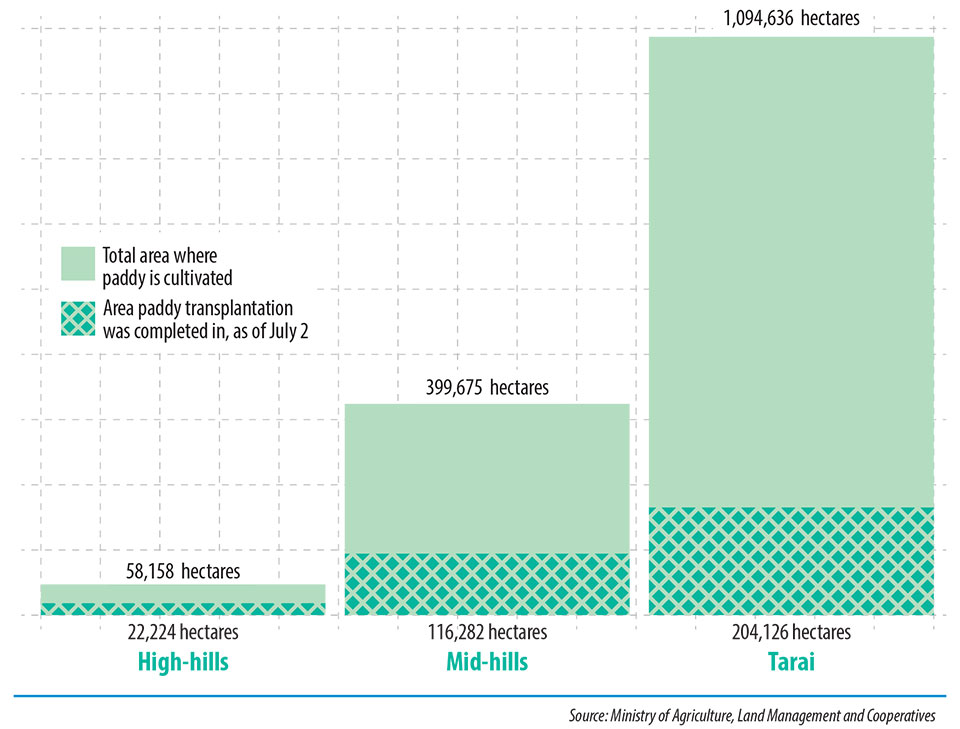
Similarly, Uttam Kumar Bhattarai, Secretary at the Ministry of Agriculture and Cooperatives, informed that the rice paddy spanned across 1500,000 hectare of the total arable land in Nepal.
Secretary Bhattarai further said that a huge amount was spent on importing food grains into the country since the existing rice paddy and its produce were not adequate to cater to the increasing population.
He added that the paddy production has been increasingly affected in Nepal over the last two decades, owing to the effects of climate change.
Likewise, senior scientist Dr Bholaman Singh Basnet said that with the development of new varieties of rice, it was imperative to train the farmers how to cultivate them.
Last year the government launched eight varieties of rice that could tolerate the drought and inundation, it was shared. RSS
Related story
One man's effort to preserve indigenous paddy varieties