

The last time the country recorded such a price rise was in June 2009 when inflation crept to 12.3 percent largely because of hike in prices of food items. [break]Since prices had moderated, except for occasional blips like 11 percent and 11.3 percent seen in February 2010 and January 2011, respectively.
The latest price hike was fuelled by double-digit increment in prices of food items like vegetables, meat, fish, dairy items, eggs, ghee, oil and fruits, says the latest macroeconomic report of Nepal Rastra Bank (NRB).
Prices of vegetables, for instance, surged by an astounding 37.6 percent in July, while meat and fish became expensive by 11.8 percent. Prices of ghee and oil also went up by 19.5 percent, while fruits became dearer by 14.7 percent in the month.
The problem created by surge in prices of food items was further compounded by hike in prices of non-food items.
Prices of non-food items, like clothing and footwear, for instance, posted a hike of 15.1 percent. Similarly, housing and utility costs also went up by 11.5 percent, while transport costs went up by 14.8 percent.
In the month, the only drops recorded were in the prices of spices and communications services, which fell by 6.3 percent and four percent, respectively.
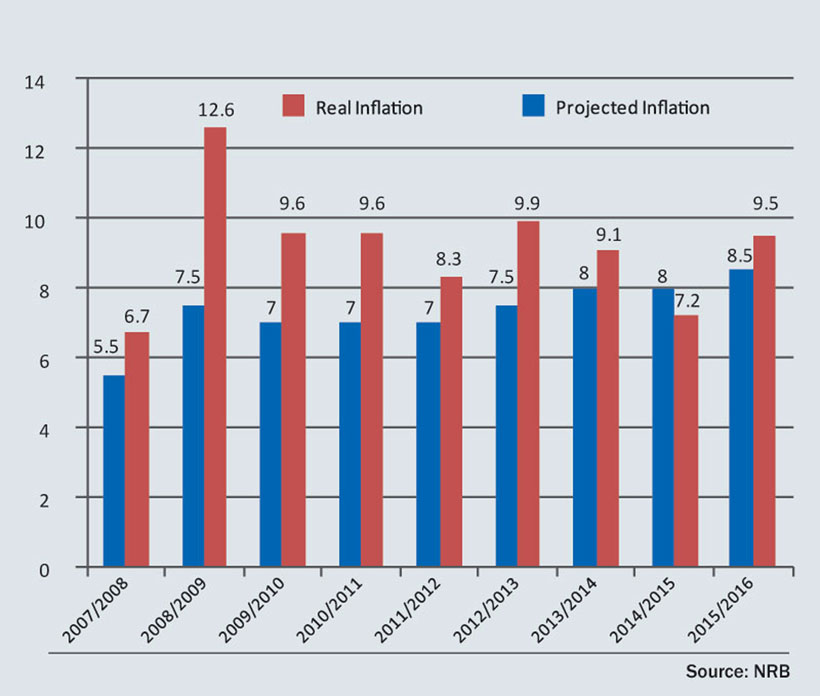
As price hike superseded price drops substantially, the annual inflation stood at 8.3 percent in 2011/12, as against the target of 7.5 percent set for the year.
Considering the result of July and average inflation of 10 percent recorded in the last three months of the fiscal year 2011/12 ended July 15, the central bank is likely to face an uphill task in meeting this fiscal year´s inflation target of 7.5 percent.
It is said Nepal can never control inflation on its own because of the country´s heavy reliance on imports of both raw material as well as finished goods. This practice had even more negative impact on the country last fiscal year when Nepali currency depreciated against US dollar, making imports expensive.
Last fiscal year, merchandise imports increased by 16.5 percent to Rs 461.67 billion from Rs 396.18 billion of the previous year. “Total merchandise imports surged significantly primarily due to a large increase in the imports of gold and petroleum products,” the NRB report said.
Merchandise exports, on the other hand, went up by 15.4 percent to Rs 74.26 billion last fiscal year against Rs 64.34 billion in the previous year. Although the figure shows impressive growth in exports, it is not substantial as average exchange rate of Nepali currency against US dollar had fallen to Rs 81.02 last fiscal year as against Rs 72.27 of the previous fiscal year.
Yet due to high growth rate of imports compared to exports, total trade deficit went up by 16.7 percent to Rs 387.41 billion in the review year.
The trade deficit, however, did not affect the balance of payment situation, which recorded the highest ever surplus of Rs 127.70 billion in the review year.
This was largely because of 24.8 percent rise in tourism income and 41.8 percent hike in workers´ remittances to Rs 359.55 billion in the review period.
Due to hike in foreign income, the country´s gross foreign exchange reserves surged by 61.5 percent to Rs 439.46 billion by mid-July from Rs 272.15 billion a year ago. Out of the total reserves, the Rastra Bank´s reserves increased by 76.2 percent to Rs 375.52 billion in the review period from Rs 213.10 billion a year ago.
In US dollar terms, the reserves of convertible foreign exchange increased by 24.4 percent to US$3.87 billion in mid-July, while the reserves in terms of inconvertible foreign exchange went up by 88 percent to IRs 60.39 billion.
Related story
Effect of inflation in Kathmandu Valley: Prices of food and bev...


-1200x560-1779899638.webp)












-1779842101.webp)






