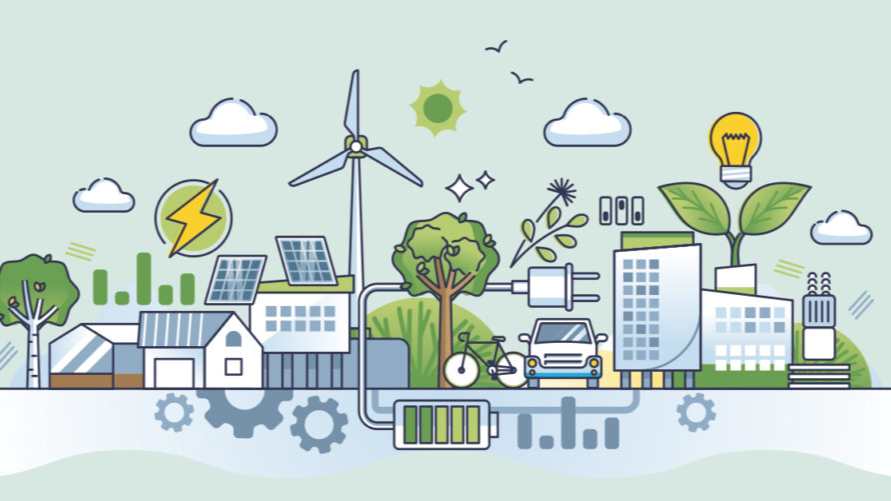
Besides the obvious threats by energy crises like declining economic growth, inflation, and unemployment, the pressure to utilize alternative sources of energy has also brought about dire environmental consequences.[break]
According to Bed Mani Dahal, environmentalist and Assistant Professor at Kathmandu University, people have turned to alternative sources of energy that will hamper the environment in the long run.
“The excessive consumption of fossil fuels emits a large amount of carbon dioxide, leading to a rise in temperature. Kathmandu is getting extremely heated. The temperature now reaches 34-35 degree Celsius. I’m not saying this is entirely due to fossil fuel consumption but to a very large extent it is one of the main reasons,” says Dahal.
“Even the CFL bulbs that are being used to lessen power consumption are hazardous environmental wastes. CFLs contain an average of five mg of mercury. Breaking a single CFL bulb in a room can result in mercury vapor levels 300 times in excess of what is deemed safe for prolonged exposure,” mentions Dahal again, adding that mercury poisoning can lead to health problems like birth defects, miscarriages, and disruption of nervous system, to name a few.
Given the rapidly increasing population and burgeoning urbanization, energy crisis will continue to see a steep upward trend. Geothermal energy would be a good option to relieve the crisis in an environment friendly way.
It is the greenest form of energy producing only one-sixth of the carbon dioxide that a natur gas fueled power plant produces. But since most of the geothermal areas are located in the northern or remote areas of the country, its exploitation is not regarded economically viable because of heavy investments associated with the construction of roads.
So the only option currently available is the use of battery-operated emergency lights and solar technologies. Recently, the capital has witnessed a steady rise in the use of solar power with almost every household opting to install a few solar panels on their rooftops.
Solar energy needs to be stored for which the most obvious solution is batteries which are not only expensive but hard to dispose of when the time comes.
The techniques used to harness solar energy are green and non-polluting. However, the manufacturing, transportation and installation of solar systems are not completely environment friendly.
“The batteries that are being used need to be disposed of after a year or two. Without proper disposal system, the threat to the environment is huge as it will lead to land and water degradation. We talk about harvesting the power of the sun but fail to see the environmental side effects of it,” adds Dahal.
While hospitals and industries are supposed to properly dispose of hazardous equipments and wastes by themselves, there is no way to control those coming from individual households. In such a case, there lies a great risk to the environment.
Kedar Bahadur Adhikari, chief at KMC, says that there is no strict policy for the disposal of hazardous wastes. “We don’t have a proper waste disposal policy yet but considering its impact on the environment, we’re in the process of formulating one,” says he.

Bikash Karki
Arjun Limbu, Program Officer at Kathmandu Environment Education Project, is of the view that Nepal has become a country of over-consumption. High consumption rate leads to excessive utilization of resources which greatly impacts the environment.
Limbu is of the opinion that rapid urbanization and subsequent deforestation, especially in the capital, has led to energy crisis, and that has brought about a lot of environmental issues.
“The impact of energy crisis can be felt not only in terms of economy but environmental aspect as well,” says Limbu, adding that the use of alternative sources of energy is taking its toll on the environment by causing a rise in the temperature.
Rajesh Adhikari, Program Manager at Environment and Public Health Organization, mentions that there is a need to reduce greenhouse gas emissions through development and utilization of renewable and alternative energy technologies. This will address the adverse impacts of climate change due to energy crisis. But there is nothing that is risk-free.
While solar power certainly is greener than fossil fuels, there are numerous problems attached to it, too. When solar cells are manufactured, there is a high emission of greenhouse gases as the regulation of the manufacturing process is poor.
Nitrogen trifluoride and sulfur hexafluoride in the atmosphere can be traced back to manufacturing of solar panels. These are some of the most potent greenhouse gases and have many thousand times the impact on global warming as an equal amount of carbon dioxide.
Besides solar energy, wind energy could be helpful in ending the current energy crisis. Wind power provides an inexpensive, self-reliant method of generating electricity with relatively little maintenance. But even that comes with a fair share of environmental impacts. One of the biggest environmental problems with wind power is the large land area required for the placement of wind generators.
The generators also need clean wind to operate efficiently, so trees around wind turbines often need to be cleared. Also wind energy will not be able to give a steady power output since winds rarely blow at a constant speed.
“Renewable sources of energy does not produce harmful carbon emissions nor contributes to air pollution like fossil fuels but we have to understand that they too come with a set of side effects,” clarifies Adhikari.
Talking about how alternative sources of energy affects the environment, Amrit Abhaymani Dhakal, electrical engineer at Lotus Energy, Pvt Ltd, says that the main problem lies in the disposal of batteries.
“There’s a lack of policy in Nepal which is why green energy sources are still not completely green. If grid-tied system was to be followed, then we can do away with batteries, and alternative sources would be more environment friendly,” says Dhakal.
Grid tie means that your solar system is hooked to the utility company. It is more efficient to be hooked to the utility grid because off-grid systems must store the energy, and that is where batteries come in; whereas, if you are connected to the grid, the utility company stores the energy. The goal of your solar power system on the grid is to produce only as much power as you use.
Holding similar views to Dhakal’s is Prof Dr Govind Raj Pokhrel, Executive Director at the Alternative Energy Promotion Center at the Ministry of Environment.
He maintains that there are negative impacts of every technology, and that green energy could be made more environment-friendly. But he also adds that the pros of the alternative sources of energy by far outweigh the cons.
“If we talk about disposal of batteries, only 15% of the batteries that are being disposed of come from solar technologies, the rest are from automobiles. Even in the case of wind energy, and if you build towers in places where there are no trees, there’ll be no issue of deforestation,” says Pokhrel.
“We just have to make use of technologies in the best possible way, ensuring that the side effects are minimized. At the same time, the country’s hydropower potential is incredible and should not be ignored. Hydropower in collaboration with alternative sources can put an end to the current energy crisis.”
The main cause of energy crisis and its environmental impacts seem to be due to lack of proper planning and policy implementation.
Though the government is in the process of formulating several policies for the use of alternative energy, whether or not they can be successfully implemented and then be able to negate the adverse effects of the energy crisis on the environment is yet to be seen.
Related story
Amendment to REEEP-GREEN implementation agreement signed