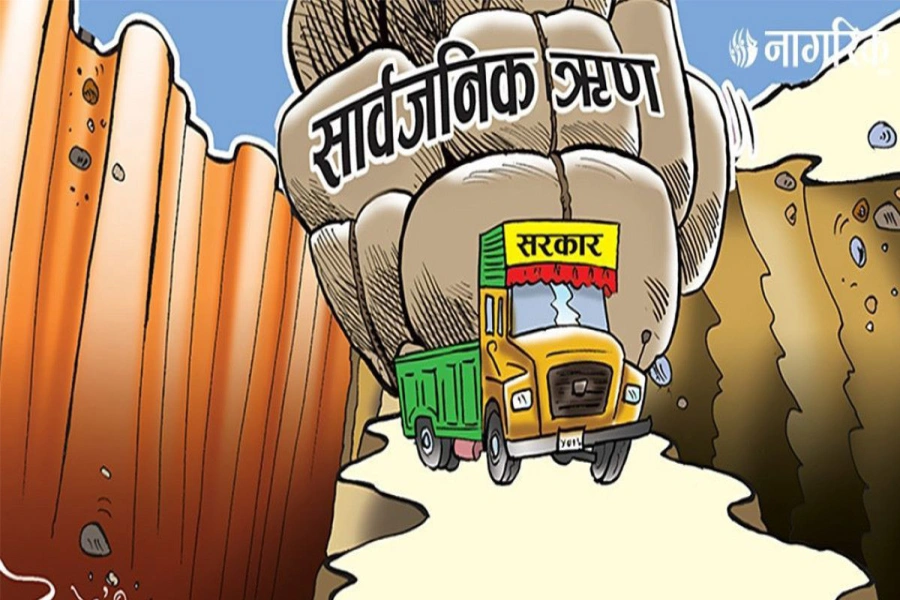
The beginning of 2010 witnessed the tremendous growth of public debt that reached 120 percent of GDP. As an effort to address this problem, Greek government issued five year bond paper worth €20 billion in January 2010. Furthermore, in March 2010 five billion worth of 10 year bond papers was issued. The main idea of the government behind issuing additional bond papers was to serve the existing debt. Issuance of series of bond papers caused doubts on the printed value of the papers. Many considered 30-50 percent potential loss of the bonds’ reported values. As Greece was the top 24th in terms of the globalization indicators, this first ever seen crisis in Greece caused a downturn in the global share market also.
CORRECTIVE MEASURES
One of the strategic measures to address the Greek debt crisis was the devaluation of Greek currency to boost export. But as Greece is in the Euro zone and its currency is in the flexible exchange rate system, the devaluation measure could not work for the sake of the single member country. Although Greece constitutes only 2 percent share in European Union’s (EU’s) economy, it was one of the major destinations of foreign investment in south-west Europe. However, this development of Greece in terms of investment centre would jeopardize if the already invested capital was not protected with reference to its potential return, so all European countries were anxious to protect not only the invested capital but also the goodwill for investment in Europe even amid the crisis in Greece. Moreover, the situation in Spain, Portugal, and Ireland was not essentially different from that in Greece where both public debt and budget deficit were high. The problem is also quite similar in Italy but the budget deficit is relatively low there in comparison to other EU countries. Most importantly, Spain and Italy are relatively centralized economies in Europe and the debt problem has been addressed by their internal measures so far.
Current debt crisis in Greece has weakened the recovery of Europe after the global economic recession. It is a major setback and possesses the possibility of inviting another economic slowdown in the global economy.
Along with the deepening crisis, the Greek socialist government announced the need for the country to choose either “salvation or collapse”. Then it took some major decisions; more importantly to reduce budget deficit from 8.7 percent of GDP in 2010 to 3 percent by 2012, raise the tax rates and collect nearly €30 billion during this period. However, slash on subsidies and elevation in tax rates caused many social upheavals in the country and many demonstrations erupted in May this year.
Along with the crisis in the share market, the Greek government devalued some of its bond papers but raised the direct rate of return that caused the short-run direct return of the Greek bond papers slightly higher than that of the return to German – the single biggest economy in Europe – bond papers. Consequently, the return to Greek bonds swelled by 15.3 percent and the government liability got relaxed to some extent.
In May 2010, European Central Bank liberalized the ceiling to the optimum loan it could provide based on the Greek bond papers. Junk bonds – the B grade bond papers that are less secure but have relatively higher short-term returns – were also included in this system. Even some of the European banks provided loans at 8.5 percent rate to the Greek junk bonds. Furthermore, Greek bond papers were also entitled to receive additional loans from European Central Bank. These efforts were helpful in securing the goodwill of the investors in Greek bond markets.
GLOBAL IMPLICATIONS
Current debt crisis in Greece has weakened the recovery of Europe after the global economic recession. It is a major setback and possesses the possibility of inviting another economic slowdown in the global economy. The gradual decline of the exchange rate of European currencies – especially sterling pound and euro – has strong relationship with the contemporary Greek economic crisis. Another major impact of the crisis is on the growth of European economies. International Monetary Fund (IMF) has projected 1 percent growth of the entire Europe in 2010 and 1.5 percent in 2011. In essence, the dismal growth of Europe has also affected the performance of gigantic economic powers, more specifically that of USA, Japan and UK.
Debt crisis in Greece has given some important messages to both developed and developing countries. The fast growing eastern Asian economies had fallen in financial crisis during the second half of the 1990s mainly because of the huge private loan that was further aggravated by the concessionary loan conditions of the IMF. Eastern Asian economies, despite the dynamic nature of them, were much smaller so the global impact of the crisis was also not severe. But the EU constitutes almost 20 percent of the world GDP, so it has far-reaching global consequences – comparatively higher than that of the currency crisis seen in Eastern Asian economies in 1997. The fundamental difference between the Eastern Asian and the Greek crisis is that the former broke due to the excessive private loans to unproductive sectors and the latter due to public loans with constrained monetary policy.
South Asia also needs to be cautious about the debt problem in line with the debt crisis of Greece. Government’s defense expenditure of the South Asian countries has been rising in the last several years – bigger countries due to their nuclear competition and smaller countries due to their internal conflicts. Sri Lanka has the highest public debt and expenditure on defense. According to the statistic of 2008, its public debt has already crossed 90 percent of GDP and more than 90 percent of the public revenue goes to debt servicing. However, the settlement of the Tamil problem is expected to reduce the defense expenditure in coming years. India has the rising trend of public debt – 70 percent of GDP in 1990 that climbed up to 85 percent in 2008. Pakistan, however, has effectively controlled its debt problem; its public debt has declined from 84 percent of GDP to 57 percent during the 2000s. The success in this regards was attributed to the settlement of the expensive bonds well in advance, cancellations of some of the bond papers, and the change of the maturity period of some bonds. In Nepal and Bangladesh, public debt is in the range of 55 to 60 percent of GDP.
In line with the emerging concept of the common South Asian currency for deeper regional integration, policy makers in the member countries require to develop strategies to curb the potential fiscal crisis in less dynamic economies in the region before their fuller monetary integration.
(Writer is an economist.)
sanjaya@newera.wlink.com.np
Related story
Public debt hits Rs 2.8 trillion mark