

What propelled the movie to such glory? Maybe, among other things, protagonist Jamal Malik’s rise from rags to riches and triumphant love reinforces audiences’ secret hope that something extraordinary is waiting to happen and that bad days will soon be a thing of the past. Probably, in the recent past, only Barack Obama sold hope better than Danny Boyle.
Hope can do wonders. It motivates us to accept the present reality and gives us a reason to be patient about the future. Something similar is happening in India. The present may not be all beer and skittles but India is rising and Indians are becoming hopeful about almost everything. I lived in India’s capital city for nearly four years but my observation about India is not confined to New Delhi. I traveled from Shimla and Nainital in the north to Mumbai and Pune in the south and the mood everywhere is upbeat. Indians have begun to feel the change that is taking place in their country.
The Indian media best reflects this transformation. Pick up any newspaper or switch on to any news channel, and almost invariably you will come across a story about “emerging India”, notwithstanding the global economic meltdown that has lately been eating up a lot of media space.
Even Bihar, easily the poorest Indian state, is in a very small way starting to notice that something positive is happening in the state, thanks solely to Chief Minister (CM) Nitish Kumar. During my travels through the hinterlands of this impoverished state, Biharis have told me that law and order is better now and schools and colleges run without disruptions. Caste is big in Indian politics, particularly in Bihar and neighboring state Uttar Pradesh, but I met many Yadavs who were ready to vote for Kumar in the next elections, not former CM Lalu Prasad Yadav, as I had expected. It’s hard not to like a government that can touch your life.
Our country
On the contrary, every time I cross the border from India to Nepal, I am greeted with overriding pessimism; people are either complaining of power cuts, poor infrastructure, fuel scarcity, incompetent politicians, perennial strikes—the list is endless.
Honestly, I would have been patient with the current mess that we are in, had there been a party or a government that could have convinced me that this is temporary and that we have started to move in the right direction. For a very brief time, I had started to believe that the Maoists might usher in the change that I have been craving for, but they have let me down—like the Nepali Congress, like the CPN-UML.
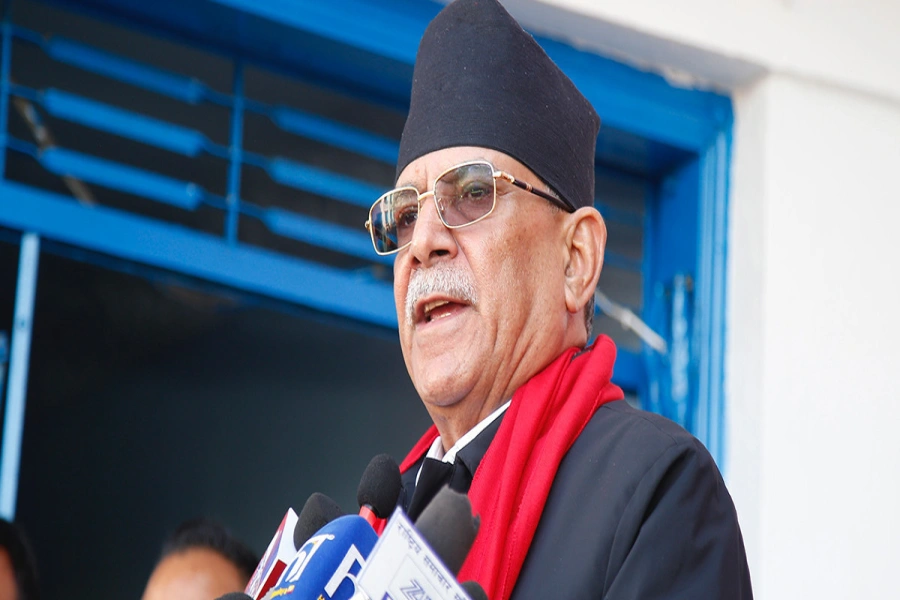
Six months may not be enough time to pass a blanket judgment on the government’s performance, especially considering that Prime Minister Pushpa Kamal* Dahal took the reins of the government at a very difficult time. As Kunda Dixit, editor of Nepali Times, told Reuters, "Prachanda got the worst job at the worst time. It is a job for superman.” But, six months is enough time to get a feel of what to expect in the days ahead. And the signs are ominous.
Time is running out but the process of writing a new constitution is yet to make any significant headway. The Maoists and the Nepali Congress, the second-largest party in the Constituent Assembly (CA), do not see eye-to-eye on any issue. The CA is yet to zero in on the structure of the federal state and the government is miles away from building a consensus with over a dozen ethnic groups fighting for their identity and representation. In such a scenario, how can I place my hopes on the government?
How can I not be frustrated with a government that cannot tell me, “Look, we know that you are bearing the brunt of 16 hours of load-shedding everyday but we are working to make sure that you will get uninterrupted supply of power in 2-3 years time.” What measures have the government taken to make up for the dip in income from remittance and tourism that is likely because of the global economic meltdown? I want leaders who seriously devote time to finding answers to such critical questions, rather than just engaging in political one-upmanship.
Asking questions may be way easier than answering them, but if we try hard, we can. What is required is a strong determination and willingness, not only from the government but from the opposition as well as all the other parties. It’s high time the parties realized that defeating and humbling their opponents will take them nowhere and rather they should work on creating relations of mutual trust and understanding.
Meanwhile, the Maoists’ should remember that they rose to power piggybacking on the hopes of hundreds of thousands of marginalized Nepalis. At the same time, they should not forget that if their hopes are crushed, the same people will be the reason for their fall.
*(corrected)
Related story
Democracy was saved but hope is all we have





-1782782519.webp)


