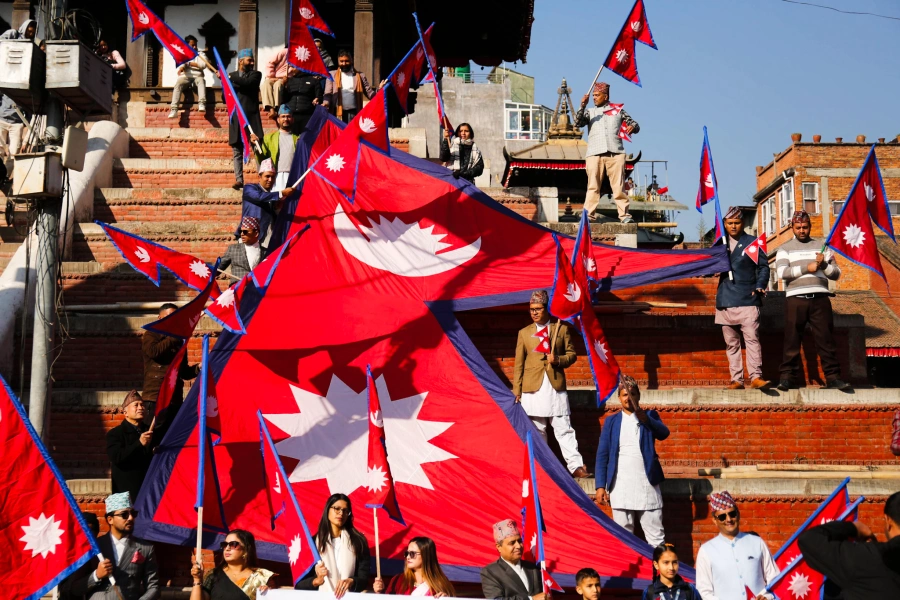
As we know, Nepal has never been defeated by any foreign military force in history. Even the great imperial powerhouse of Britain had to pause in its mission of colonization when it came to Nepal. Our mighty warriors valiantly fought enemies and protected the sovereignty of the country. They even sacrificed their lives in battlefields, but never surrendered to enemies. So, we will always be grateful and indebted to those heroes. And these days, we proudly boast of our uncolonized history.
But actually, this is not the complete picture of Nepal vis a vis colonization, because whether or not we have never been colonized is always debated. For me, the answer is both yes and no. Obviously, we have never been colonized directly by foreign military forces. But what about other facets of colonization? Can only political colonization be called colonization? What about cultural colonization? Though we have escaped military colonization, we should realize that colonial powers have just shifted their emphasis from military to cultural colonialism. Hence, the account of our uncolonized history, as presented to us, is only partially true.

PHOTO: PLAYTHEPAST.ORG
Our prudent leaders invoke this one sided account of history— where colonization is still defined as political colonization by a military force—to deliver stimulating speeches to the mass, the gist of which is that we are the victors of history because we have never bowed to any enemies. However, this account is mere deception, and the speeches, dissemination of illusion. The leaders seem to be unaware of the concept of ‘independence’ which is closely linked to the concept of cultural colonization. Unless we become capable of producing everything we need to fulfill our needs, we cannot be independent. And in order to be independent, we must also be skeptical and critical of imported colonial cultures. But in reality, due its open-armed acceptance of imported culture, Nepal has repeatedly been colonized in the past, and continues to be so.
For instance, Rana Prime Minister Janga Bahadur imported the English language into Nepal after his visit to Europe. The same English language has now become the most powerful tool of hegemony on our culture. And today, we are witness to the influence of English in various sectors of our culture such as academics, administration, government, movies, television programs, and many others. Moreover, we can see many hoarding boards of foreign celebrities around town, which manipulate the people into delivering dividends straight to multinational companies.
English, Indian, and Korean movies are popular among Nepali audiences. Nepali youths are obliged to go to foreign countries for their livelihood and to support their families. Along with money, they come back with a preference for different cultures and languages. We have a few obvious political encroachments, and when our government announces its annual budget, it anticipates a substantial percentage of the money from donor-countries. So, aren’t we being colonized, in one way or the other?
Our leaders invoke a one-sided account of history to deliver stimulating speeches to the mass implying that we are the victors of history.
Here, I’d like to mention another example of how we are being colonized culturally. Dr Sanjeev Upreti wrote once that today, school children pay homage to the country by singing the national anthem dressed in a shirt and pant, or skirt, with a tie around their necks even in the sweltering heat of summer. Isn’t this an example of the dominance of Western culture over Nepali culture? We see more and more these days that even if people do not celebrate Nepali occasions enthusiastically as in the past, they are very enthusiastic about foreign occasions like Christmas, Valentine’s Day, New Year, etc.
Every day, we are immersed in Western, and particularly American, culture, so much so that life without it has become impossible. Dr Arun Gupto, in his essay, “Was Nepal Colonized?” once wrote that “the west decolonized Asia and Africa militarily and politically, but culturally and economically continued coca-colizing and McDonald-izing”. Albeit not politically, but we are continually being colonized culturally in this way. The autonomy and independence of our country is a myth. So, what happens to our pride regarding history? To reduce dominant cultural hegemony, we need to be independent, and our leaders should be devoted to independency instead of glorifying an incomplete history which presents only one facet.
Only then is the progress, prosperity and peace of our country feasible. The necessity of living in hybrid culture is the stark reality of the day, so it is impossible to be completely against cross-cultural practices. Instead, reducing hegemony is essential. Merely priding ourselves on history is a mistake. Instead, we must be alert to imported culture which has the potential of engulfing us and wiping out our native culture, customs and rites.
The author is a student of English at Tribhuwan University
rayfrancis75@gmail.com
Related story
In Pictures: Blue Diamond Society organizes 20th Nepal Pride Pa...