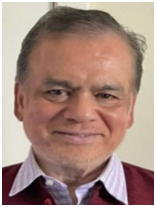
“Cooking is my hobby and that is what brought me to meat products sector,” he says.
Having received no formal training in meat processing, he recounts going to libraries to search for books on meat processing and related subjects. Those were the days when sausages were new and popular in Kathmandu and Chandra was curious to find out how they were made. His interest took him to Calcutta where he was told that he could watch how sausages were prepared when he went to buy them.
Unfortunately, the sausage makers had become, according to him, “clever” and had been selling the product without showing how they were made. So, he returned home without any knowledge. He was not discouraged by the first failure; he went back home and tried experimenting in his own kitchen with his wife’s help. He also had a shed which he used for making sausages but he did most of the work in the kitchen itself. He had two refrigerators where he stored his homemade products. He then started selling the sausages in the market.

“It was like daily practice for me and I kept on improving my methods to make them better”, recalls Tiwari. This brought him in contact with a German, Hager, introduced to him by one of his friends. They started talking about the meat processing business and preparation methods.
Observing his work, Hager suggested that the method he had been using was 100 percent wrong and that if he really wanted to learn and work in this business he should go to Germany. He even offered to arrange for the visit and told him to arrange the paperwork. It took Tiwari two years to go to Germany on a scholarship on livestock training where he was trained for two long years.
He took a two-year course, each comprised training on the old method of meat processing and advanced technology. Equipment for both methodologies are currently used in his factory in Kathmandu.
Completing his two-year training in Germany was quite an accomplishment for Chandra dai since many people fail the course and some even take 5-6 years to complete it. His interest and age as well as his hard work had earned him that appreciation everybody murmurs today and he became a butcher chef. Adept at training, he decided to return home and practice instead of working in Germany as he thought he’d be making a lot more impact back home.
Coming from a Brahmin family and working as a butcher chef earned him many taunts from his relatives when he was just starting off his business. However, his success and establishment of Nina and Hager product as a household name has now changed all that.
Starting out his business was not an easy task since he was not financially stable at that time. He had to rely on his bicycle to make deliveries of his products. After the production stage, marketing emerged as another challenge. Supplying his products in the market, where the people questioned the high price, was a tough job. But as luck would have it, the products eventually started selling and were demanded by other markets in the capital. It took another 4-5 years before he could taste any success.
“The hardest part was that even when my products were selling well, I was not receiving any money,” recalls Tiwari. With only accounts receivables but no cash, he was forced to put a hold on his work for a while. This proved to be fortunate because when he came back home, he received many phone calls asking him why he had not been sending supplies. His customers also showed their readiness to payback the withheld amounts. He then found out that his products were selling like hot cakes in the market.
Although his business is now in robust condition than he had imagined, he still has not been able to meet the market demand because of the need to maintain quality and not quantity. He believes that in the food processing business if one is not directly involved in the process, then the quality can be compromised which can lead to failure of a business.
“People at first thought my products were expensive but I had always been focused on the quality and I never compromised it”, says Mr. Tiwari.
Regarding the problems he faced, he says entrepreneurs like him experience problems of margin rate. He’s had to face many issues with distributors who try to increase their margin at every given opportunity which puts suppliers under pressure. His words to young entrepreneurs:
“If you’re strong and confident that your products are of good quality, then you don’t need to be scared of anyone.”
(This is an extract from “A Nepali Entrepreneur’s Handbook” published by Entrepreneurs for Nepal. For details, visit e4nepal.com.)
Related story
A place called home