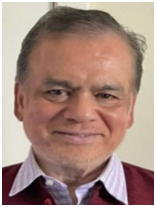
The documentary, which deals with the ancient technique of iron-mongering, explores the potential of iron-smithy as a trade.
“The ancient wisdom the blacksmiths used was fascinating for me, and the fact that we, although being rich in iron ore, have to import the metal from India was very disturbing,” said Birendra Malla, producer of the documentary.
Malla, who is a PhD program candidate, believes we should utilize the natural resources we have in this particular sector.
“This way, we’ll not only benefit economically but also preserve the ancient trade and skills of our blacksmiths who have otherwise resorted to other means of occupations.

Bista, on his own, considers the blacksmiths to be the engineers of the society, and believes that they deserve respect and equal space instead of being categorized as Dalits (untouchables.)
“I decided on directing the documentary because, during my research, I was amazed at the talents and the love these blacksmiths have for their work,”
he said.
Bista has also been involved in aerial and wildlife photography. His recent works include photography and filmmaking of Fishtail Air, Everest Skydiving 2009, and the Kala Patthar Cabinet Meeting of the Government of Nepal in 2009.
As for documentaries, he has to his credits such works as Trophy Hunting, The Gateway: Simkot to Holy Kailash, Rights Over the Life, The Fossils of Strikes, followed by Snow and the upcoming The Blacksmith.
A special screening of the show was organized at Sattya Media Arts Collective in Jawalakhel last Thursday in the presence of the director. Here is the interview with the director.
Tell us about your love for documentary making?
For me a documentary is a from of communication that attempts to convey the full version of a message I intend to put in front of society. We have visuals and dialogues contributing to give the audiences a clear and a precise message.
Also, I believe that we as the citizens of a country have a duty towards our fellow citizens and the nation. We can all utilize our area of interests to work for the betterment of the nation as a whole.
Through my documentaries, I strive to make people aware about various aspects of Nepal and our everyday lives. My last documentary Trophy Hunting too was made with the same purpose. I will always tackle important issues through my documentaries, with an attempt to make the concerned authorities and the general public aware.
What was intriguing about this documentary?
This documentary deals with the life of blacksmiths. For me the most exciting part of this project was the filming part. We decided to go to a set location and filmed the entire process of making iron that depicts the entire process right from finding and collecting the iron ore to the creation of a new shiny object.
After doing a bit of research on blacksmiths I learnt that the very people regarded as untouchables were the actual engineers of our society. The blacksmiths have created chains of iron and have set up a bridge in Parbat district that stands erect till today.
However the blacksmiths today have completely halted their work and we have to import iron from India in-spite of having abundant resources.

How did you like the whole experience?
The experience was wonderful. As I have already mentioned the blacksmiths had stopped making iron. It was a tough task trying to convince them to repeat the whole process. Once they agreed the filming part was an adventure in itself.
The passage to the mines was extremely narrow; heading the entire group with cameras in the dark was challenging. The sharp edges of the walls often hurt us but the energy and the enthusiasm of the locals however kept us strong.
Also the ancient techniques used by the blacksmiths amazed me, for instance while they made coal by burying wood into the ground, it was astonishing to see that there was no ash and only coal.
Will the audiences get to see a feature film by you?
I don’t think that is likely to happen. Commercial cinema has never interested me. I absolutely do not understand the kind of films being made today because all I see on screen is a singing, dancing young couple, actresses who are always chased by goons and actors who are constantly throwing flying kicks and yelling.
Cinema needs to give out a message to society and for this purpose I think documentaries are the perfect means. I therefore would like to continue as a documentary film maker.
Any immediate future plans?
Well, I am looking at a few things right now. Apart from giving classes to students on photography and other technical subjects related to film making, I will soon start working on other documentaries. This time my project will deal with child psychology.
Being born and raised in Humla, I understand the various social and psychological difficulties that come up in the process of acquiring education. From the difficult road to school, to household responsibilities, an individual wanting to study has to overcome numerous obstacles.
I will take child psychology as a subject and deal with it realistically.
Related story
World Blood Donor Day 2019: ‘Safe blood for all