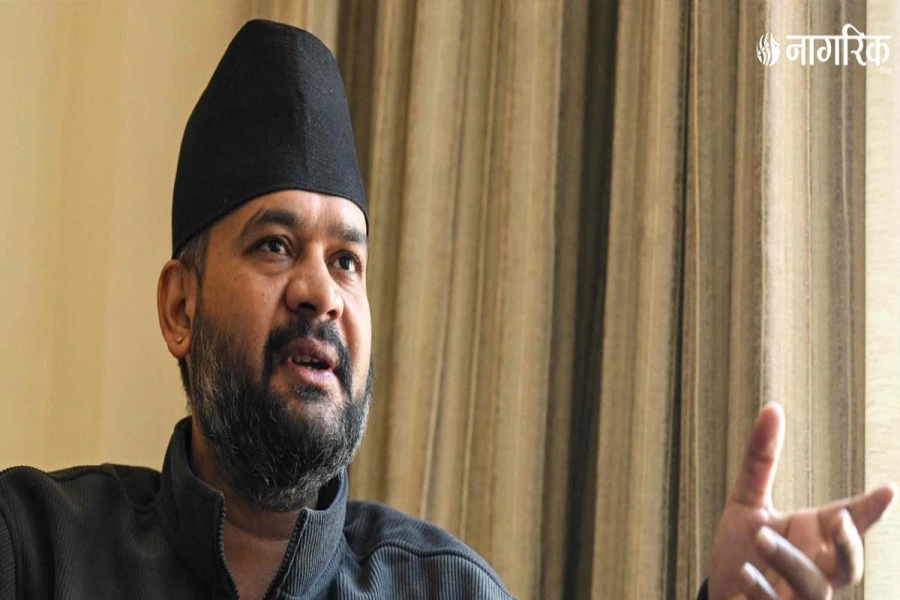
At a meeting of the Constitutional Committee (CC) under the Constituent Assembly on Sunday, Prime Minister Baburam Bhattarai lamented the lack of cooperation from other parties on peace and constitution. PM Bhattarai believes leaders of other top parties are trying to ‘besiege his coalition’. There is a good reason why he should feel this way. The peace process that seemed to be progressing by leaps and bounds at the start of his tenure nearly seven months ago has lost its initial momentum; the latest hurdle on the start-stop process is the issue of integration. The Big Three seemed to have made some headway on Sunday as they agreed in principle to adhere to the seven-point agreement while settling this issue. The highest rank the Maoists should be given had been the major bone of contention thus far. Apparently, the Maoists are now ready to concede their demand of Brigadier General after Nepali Congress and CPN-UML refused to budge from their seven-point stand.
If an agreement has really been reached on this issue, it’s a welcome development. But if the past is any guide, caution will be advised. It is by no means certain that this Maoist ‘climb down’ will go down well with the Maoist party, especially its hardline faction. Often, the Maoist establishment enters into an agreement but cannot sell it to its own comrades. This happened with the return of seized properties, which the Maoist establishment seemed keen on even while the Baidya faction opposed it tooth and nail. The hardline faction has similarly been adamant that the special directorate under Nepal Army be led by a former-PLA commander and has continued to insist on group-wise integration, which will be a clear violation of the seven-point accord.
Likewise, the Maoists have been pushing for an executive president. Irrespective of the question of the suitability of such a system for Nepal, the Maoists have been trying to make headway in peace process by making this constitutional issue a bargaining chip. While the peace and constitution processes are indisputably linked, the Maoists must be disarmed before the promulgation of the new constitution. There can be no two ways about it. A political party going into future election bearing arms will be a recipe for disaster. The onus thus lies primarily on the Maoists to prove their commitment to multiparty democracy. And yet it’s equally important that other major actors enter negotiations with a spirit of compromise.
As the deadline for the final CA extension nears, Nepali Congress and CPN-UML have upped the ante against the Maoists in order to consolidate their vote banks. The Madhesi parties too are saber-rattling on highly contentious issues like ‘One Madhesh’ and the likely disintegration of the country (as DPM Gachchhadar did on Sunday). The way things are going, the closer we get to the May-end deadline, the more this polarization will increase, thus putting the peace and constitution agenda in jeopardy. Such a scenario must be avoided at all costs. A little flexibility now might avoid a disaster tomorrow.
Related story
Water level of Narayani River crosses danger mark