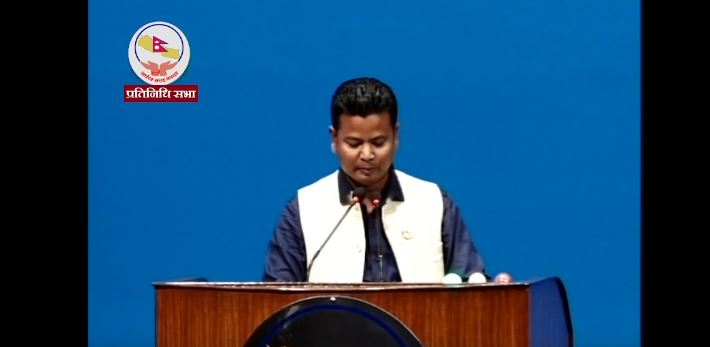
"Maghi always takes me back to my roots," says Shanta, a former Kamaiya (bonded laborer) turned parliamentarian. "In the entire year, only Maghi is the day when I feel the happiest."[break]
"While working in bondage, if I had not caused any loss to the landlord -- if I had not broken any pots or glassware -- then I would be entitled to a new set of dress on Maghi day," reminisces Chaudhari recalling her days as Kamaiya. She started to work as a bonded laborer when she was eight and continued to struggle for 18 years.
"Even today, whenever the day (Maghi) approaches, I am overwhelmed by similar sense of joy and emotions," she says.
But not all the Kamaiyas are as lucky as Shanta. Though the government formally abolished Kamaiya tradition in 2000, thousands of Tharu children are yet to liberated. Almost 2,000 Tharu children are still serving as bonded laborers in Kailali district alone, according to Friends of Needy Children, a rights group working for Kamaiya welfare.
The government has miserably failed in ensuring the minimum opportunities and facilities to the Tharus despite declaring the Kamaiya tradition illegal, says Shanta.
"Many Tharu children are still deprived of their rights to attend school," she says. "And many Tharu families are still languishing in pathetic conditions."
The indigenous Tharu community began to mark the day as New Year since time immemorial, according to Prem Lal Chaudhari, former parliamentarian. "There is no exact date known as to when did the Tharu community start celebrating Maghi, but it is our biggest festival."
Though Maghi is celebrated on the first day of the month of Magh, the festival is now observed every year from the last week of Paush to the third of Magh, according to Chaudhari.
The celebration depends according to one´s financial status, says Satya Narayan Chaudhari, coordinator of the Maghi festival main organizing committee in Kathmandu. While the well-off families relish pork, fish and wild boar delicacies, the others go for less costly food items such as special kind of boiled rice, chichar, sitwa etc, he says.
"Family get-togethers and visiting elder people´s house to seek blessings are some of the main attractions of the festival," he says. "It is like Dashain festival of the Hindus."
Keeping oneself clean, thinking positive and planning for the year ahead is what Tharus do on this day, according to Chaudhari.
Chaudhari informed that tens of thousands of people will gather at Tundikhel on Monday to celebrate the festival.
"Besides the merriment, we are organizing the festival in the capital to pray for the welfare of the entire community as well as for peace, stability and progress of the entire nation," he said.
The organizers are expecting 50,000 visitors at the festival celebrations in Tundikhel. There would be more than 100 stalls offering Maghi delicacies like pork, fish, ghughi (snail), dhokari, chichar and sitwa apart from display of many handicraft items.
"While the major highlights of the occasion would be cultural and social life of the Tharus, the visitors will get to celebrate Maghi in Tharu style," says Chaudhari. "With thousands of Tharus decked up in their traditional attires, things are just going to be beautiful."
Related story
Maghi fever grips Tharu community