Excerpts:
So have books always been a part of your life?
My father was a UN diplomat and was assigned all over the world. This meant every time we moved I had to make new friends and sometimes it took a long time to do that. Thus books have always been an escape for me. My father loved literature as well and he made it a point to take us to the British Council wherever we went, whether it was Rangoon or Kabul, he'd say, "The first thing I'm doing is getting you a membership at the library," and he would take us there himself. We grew up with Enid Blyton and Nancy Drew and moved on from there.
Are you a fan of any genres?
Not particularly. I don't have any favorites where the genres are concerned. When picking a book to read, I just go with the flow. For example I recently visited my daughter in Tanzania and while I was there I got really hooked to reading works of African writers. I enjoyed it as well. Though of late, I have become a fan of the Indian writing scene as well.
What do you like about the Indian writers?
There is a lot of amazing writing going on in the sub continent at the moment. Also I find that the Indian writing closer to home. The South Asian reality is our reality and we can identify with the problems or the scenarios that they speak about. I think that Indian writers are doing an amazing job.
Is there a book that has made a big impression on your life?
I remember reading a book I shouldn't have read. It was called Nausea by Jean Paul Sartre. It was such a cynical book and I believe it fell on my hands rather prematurely. When you are young you shouldn't be cynical, you should be joyful. But that book concluded that everything that is being said has been said before. Everything that needs to be painted has been painted before. I found myself panicking after reading this book. I worried about not being able to come up with new idea because everything has been thought before. So for a while, that had me feeling very sad and depressed. Even though eventually I did get out of that mindset, it was one of the first books that made a profound impact on me.
So literature tends to influence your emotions but what about your job as a gallery curator?
I have always thought that art cannot exist in isolation. I immensely enjoy bringing the worlds of literature and poetry into our art gallery. We have worked with several collaborations between poets, writers, and artists. The response from the general public on this too is always a positive one.
Is there any collaboration with the literary world that you are particularly proud of?
Indeed, perhaps one of the most important programs that we organized at the Siddhartha Art Gallery was 'Khula Dhoka' back in 2006. If you remember at the time, there was a political impasse. The King was not speaking to the political parties and neither were the Maoists. It was a deadlock of sorts so we were desperate to help open the doors of dialogue. Art obviously was our only medium to help in whichever way we could. But we decided to make it more interesting. We not only got together about 100 artists and but some 50 Nepali poets as well. We asked them to create for this function and the results were incredible. Both the poets and artists skillfully channeled their pain and frustrations. They were incredibly expressive; some even claimed it to be therapeutic. It's a collaboration that I'm very proud of.
Have you ever tried your hand in writing? How have you found the experience?
I'd say I have dabbled a little in writing. I used to write columns for a magazine. I have also written for 'Telling a Tale'. It was an anthology that had the works of many women writers of Nepal. Several people had contributed and I was one of them.
Recently though we are working on an exciting project. Patan museum is coming up with a publication for the very first time. We are launching a book about the Chitrakars of Nepal. It is going to be a beautiful coffee book. Even though I'm not writing the main article, I will be doing an overview commentary on it. It's proving to be very interesting. Writing is certainly a discipline. I believe it requires a quiet moment.
Despite your busy schedule, how do you manage to maintain your reading habit?
These days I only have the luxury to read while I'm travelling. It's in the planes and in hotel rooms when I'm alone that I get a chance to flip through my reading wishlists. But that doesn't mean there isn't any reading on my schedule when I'm not travelling. It's just that these days they are more research oriented. Along with learning about the Nepalis and Indian Chitrakars, at the moment I'm doing another research on some of the British people who lived here in Nepal and the sort of impact they might have had on the arts. So there are more research papers and books these days.
Related story
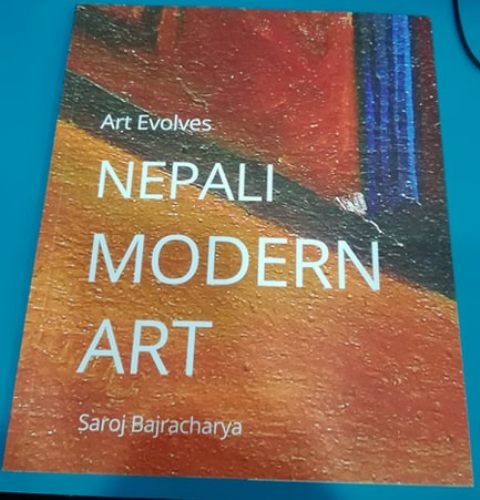
‘Art Evolves: Nepali Modern Art’: Review

-1200x560-1774606010.webp)