The Madhav Kumar Nepal led-government has been in power for almost twenty months. During all this time period the prime minister never seems to have taken any interest or initiative in addressing the problems of energy crisis in the country. However what is most impressive about his sense of priority is that he has always found time to inaugurate high schools or cultural programs in different parts of the country, but never had time to seriously address the issue of energy which is linked with the hopes and aspirations of our people for social and economic development. As for the energy minister the less we talk the better it is. In the mean time the energy supply situation is getting from bad to worse.
The only place where load shedding does not take place, if the national press is correct, is the house of the energy minister. National media informs us that the electricity authority has installed a powerful generator to serve the household needs of the honorable minister including lighting facilities in the road leading to his property. Of course, this facility to the honorable minister is no where sanctioned in the facilities and conveniences that ministers are provided by the state. But no one in the government including the honorable minister seem to think that it is important. Ministers in "New Nepal´ seem to have been taken for granted that they are somehow above the law. As the saying goes: Some are more equal than others.
There are a few fundamental questions about the hydro sector in the country that deserve our attention. First, for whose purpose do we produce electricity in Nepal? This question may sound naïve. Is it not clear that we should generate electricity to meet our internal needs? And yet the fact remains that we are not clear on this issue; at present most of our efforts to attract foreign investments in the hydro sector does not address this question.
Nepal´s electricity consumption is 70.8 kWh per capita (2006). Generally, to reach the status of a developed country consumption of electricity is over 10000 kWh per capita. The irony is that even at such a low-level of consumption Nepali people are facing a supply constraint that seems to remain with us for a long time to come. On the other hand, if our ambition to reach the status of a developed country is to materialize in the next three to four decades with an energy consumption of around 10000 kWhu per capita, the total electricity requirement of the country will be over 50000 mw. This means one fundamental conclusion: Nepal needs all its hydro electrical output for many years to come for its own internal consumption if it is to maintain a growth rate of 8 percent or more in the next few decades.
The current energy policy of the government shows a level of intellectual bankruptcy that remains incomparable. The logic of the concerned authorities that load shedding will be over in five years implying that total generation capacity that includes many run of the river hydro projects equals available usable energy is utter nonsense.
Conversely, it implies that the whole philosophy that Nepal has huge hydro potential that it should develop for export purpose is basically wrong. We must develop our hydro potential in order to cater to our own market in Nepal if the country aims to achieve a developed country status in the next three to four decades. In fact the report prepared by a panel of experts headed by Som Nath Poudyal comes up with the conclusion that if the country follows a high growth path in the next few years, the total electricity generation capacity will have to reach 10000mw by the year 2019/20. If this is the future scenario, it does not make any sense for the government to think of an investment plan in the hydro sector that is geared for exports. And yet what the government seems to be desperately trying to do is to attract foreign investments in the country not to meet the consumption and industrial needs of the country, but to export it while we remain in the dark with industrial establishments working well below capacity for lack of power.
Second, the pricing policy of the government with respect to trading in power is an exercise in absurdity. At present we are eager to award attractive power generation sites that can generate cheap power to foreign investors primarily for exports knowing well in advance that we will then have to import power at a rate two times higher or more from foreign suppliers. Take the example of Upper Karnali hydro project that is expected to generate 300mw. It has been labeled as the "jewel in the crown" by hydro experts in Nepal because it is probably the cheapest project in the country. The cost per kwh we are told is around Rs 2. We have already awarded this project to a foreign investor on condition of exporting most of the output knowing very well that the whole output can easily be used in Nepal to support new industries that are starved for power. Once power generated at less than Rs 2 on is exported on transmission lines constructed by the government of Nepal with loan from international financial institutions, we will then be importing the same energy for over Rs 10 per kwh assuring for ourselves substantial loss since NEC has a tariff structure way below the import price. The economics of energy trading as it is practiced by Nepal at present defies all common sense. It is: Export cheap and buy the same product at an expensive rate so as to maximize losses. This is an example of economics of absurdity which the government is committed to.
The argument here is not against foreign investments in the hydro sector. Indeed, it is one sector that can be of interest to foreign capital and the government of Nepal should take the initiative to attract capital from India, China and other countries as well. However, we must also make it clear that electrical energy can be exported from Nepal only if there is surplus available after meeting the internal demands of the growing Nepali economy. This condition should not make any difference to private companies as long as they are offered a purchase price that assures an attractive rate of return.
Third, there is the issue of providing tax incentives. Granting tax incentives to foreign capital is not unusual if it generates socio-economic benefits not reflected in private profit. However, the current energy policy of Nepal ignores this logic. In our case, tax incentive is provided to export an item that is simultaneously imported at a much higher cost. Does this mean that our tax incentive policy is geared to encourage exports of products that we immediately import at a much higher cost thus increasing the magnitude of economic burden (negative value added) to the Nepali people? Simple common sense, which incidentally is not all that common, would indicate that tax incentives should be granted in the case of hydro power only to producers that sell their output inside Nepal and help reduce the current energy crisis while helping to boost agricultural and industrial production. But this logic has yet to find acceptance in the country.
Finally, it would be doing injustice to end this article without a few words on load shedding that we are facing these days. The current energy policy of the government for all practical purposes shows a level of intellectual bankruptcy that remains incomparable. The logic of the concerned authorities that load shedding will be over in five years implying that total generation capacity that includes many run of the river hydro projects equals available usable energy is utter nonsense. And yet this is the model that is being used to convince us that there will be no load shedding after five years.
One would like the government to consider the arguments that have been put forward in this article. The energy ministry does not lack people of talent and integrity. But this is certainly not reflected in the policies of the government. All we have been hearing is the continuous squabble and clash between the secretary and the concerned minister in a very transparent and ugly manner not on policy issues, but more seriously on questions of appointment of project managers. It does not take a great deal of imagination to realize why this is so. This is the unfortunate part of the whole issue and explains why hydro power development in the country is geared toward making a few people in power rich and loaded at the cost of the vast majority of the downtrodden and the poor.
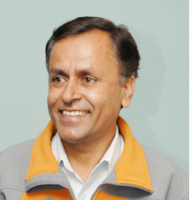
Writer is the co-chairman of the Rastriya Janasakti Party
Related story
Where logic fails