"Like China two decades ago and the United States in 1950, India stands on the cusp of transformational economic and social change, a jumping-off point at which the demand for electricity is about to explode,” reads one commentary in The Washington Post, taking clue from the shutdown of electricity supply early last month that affected half of India’s population.
The high-flying growth over the past two decades registered by the Indian economy has called for large investments in infrastructure, including in the power sector. India’s generating capacity now stands at 200,000 megawatts, of which some 40 percent has been added over the past five years alone. Despite this expansion, acute power shortage affects most parts of the country as the production of coal, which accounts for 60 percent of the country’s electricity, has stalled.
OPPORTUNITIES FOR NEPAL
We, in Nepal, never tire of boasting of Nepal’s immense hydropower-potential, estimated at some 83,000 MW. The sad truth, however, is that this has remained the proverbial pie-in-the-sky because we are hardly making any use of it—currently we utilize in the range of 600 MW (or less than 1 percent) of the potential. More importantly, the installed capacity is a fraction of what we actually need—an estimated 2,000 MW.
With huge unmet demand for electricity at home and potentially unlimited opportunity for power-export to India, development of the power sector has been the government’s top priority for decades. Unfortunately very little has been accomplished in terms of getting the power supplied to homes, businesses, and factories. Inability to harness the country’s hydropower potential, in turn, has worked as a powerful constraint on the country’s transition from a largely agrarian and subsistence economy to a modernizing and industrial one.
Energy resource development in general and hydropower development in particular require immensely large commitment of capital resources, high-level technical skills, environmental safeguard provisions, and a long-term commitment to see the project through and humming. Obviously, the government or the private sector isn’t prepared to undertake large-size projects, which means that outside capital and expertise are needed for developing the hydropower sector, with output large enough to meet domestic demand and to provide export earnings from supplying surplus power to Indian markets.
During the early 1990s, the government accessed the large multilateral aid organizations—principally the World Bank—to help develop 700 MW capacity Arun III project in eastern Nepal. However, the deal fell apart, apparently on doubts over the government’s ability to handle such huge project.
Failing to obtain foreign-aid commitment to finance hydro sector projects leaves the government with only one option—to attract foreign direct investment (FDI). With such shift in policy, licenses have been issued for the construction of over a dozen large-size hydropower plants totaling 20,000 MW, much of it as joint ventures between Nepali and foreign investors. However, until now, progress has been limited to survey and cost estimation, with no substantial investment.
INDIA INC. UNWELCOME
There are many reasons for Nepal’s failures to attract foreign investment—in energy as well as other sectors. However, in my view, the main reason has been the perception of unwelcoming attitude towards Indian investment.
Although this is not a stated policy there is an undercurrent of feelings—amidst political leadership as well as the general population—that Indian investment isn’t in the country’s national interest. While there is some appreciation that Indian capital, skills, and market access would help improve Nepal’s economy, there are serious doubts over the benefit of allowing large-size Indian presence in the country. The reasoning is that Indian presence, including its command over a sizeable chunk of the national economy, would adversely affect the country’s politics and even threaten its sovereign status.
Such perception is imaginary, unsubstantiated, and contains an immense amount of self-doubt, but this logic is beside the point. It is the psychology—call it national consciousness—which is doubtful of India’s intentions, especially when it comes to sharing a business enterprise, operating a factory, or investing in an infrastructure project, including the hydro.
The Economic Times, a Mumbai-based publication, recently catalogued the difficulties faced by major Indian companies doing business in Nepal. The Unilever Nepal, a subsidiary of Hindustan Liver, had to shut down after labor troubles that required Prime Minister’s intervention. Earlier, in 2008, Colgate Palmolive moved out, unhappy about the growing uncertainty of business conditions in the country.
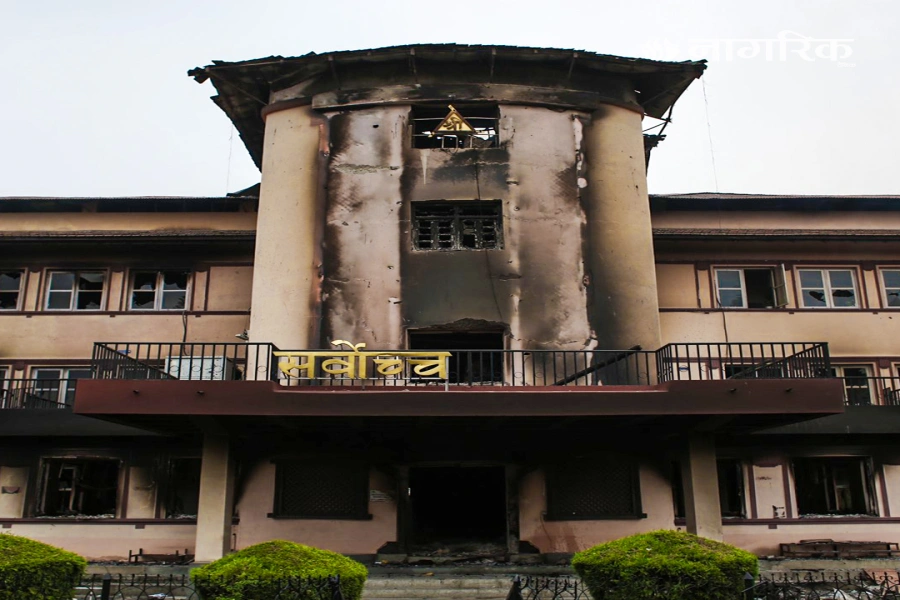
Surya Nepal, a garment producer, closed down its operation last year due to its militant labor force which locked out the factory and physically threatened its staff. Also last year, the infrastructure giant GMR, a private sector Indian company, which had obtained permission to work on a 900 MW hydropower plant in western Nepal, was attacked by a mob on its project site and its office buildings were burned down.
Government response to these incidents has been lukewarm and unsympathetic.
Other recent examples of unwelcome for Indian investments is the withdrawal in 2011 of passport printing contract won by an Indian company through open bidding; and, some months earlier, a wide-ranging opposition to the awarding of contract to an Indian company to upgrade and manage the international airport.
Federation of Indian Chambers of Commerce and Industry has complained that ‘strikes, extortion and threat to life and property have hit Indian investors and the business community in Nepal.’
LIMITED CHOICES
Despite these unpleasant incidents affecting Indian investment in Nepal, the hard truth remains that the country has no other option to seeking India’s help if it is serious about developing its hydropower resources. It would much prefer to access non-Indian sources of investment—for no other reason than not being seen as too dependent on India—but this is unlikely to materialize. As in the past, multilaterals and overseas private investors cannot come up with large commitments of investments that Nepal needs and, particularly, the Chinese investment—another credible source besides India—is out of question because of India’s sensitivity to Chinese presence in Nepal.

Looking from the Indian side, it has got other alternatives to meet its energy needs but easy access to Nepal’s vast and cheap source of power offers it a more attractive choice. However, the unwelcome climate for Indian investment would discourage any large-size commitment of resources from them. This is sure to keep power development in Nepal in a limbo for a long time, as has happened in the past.
However, looking at the option of developing Nepal’s hydropower resources purely from a business point of view, this offers a superb opportunity for expanding bilateral trade tied to each country’s comparative advantage. Exploitation of hydropower resources offers Nepal the single large-size opportunity of making a quick and broad-based economic transition anchored on cheap, reliable, and plentiful energy source. Additionally, earnings from electricity sales to India will provide it access to long-term capital to fund other infrastructure projects, at a time when outside funding for such investments is rapidly drying up.
The signing of Bilateral Investment Protection Agreement (BIPA) with India during PM Bhattarai’s visit early this year is the first step to improve business climate for Indian investors in Nepal. However, much more needs to be done to convince Indian investors that their investment is welcome; that government will guarantee its safety; and that all instances of infringements will be dealt with seriously.
sshah1983@hotmail.com
Related story
Concerns arise over dubious networking business ‘Indian Vestige...