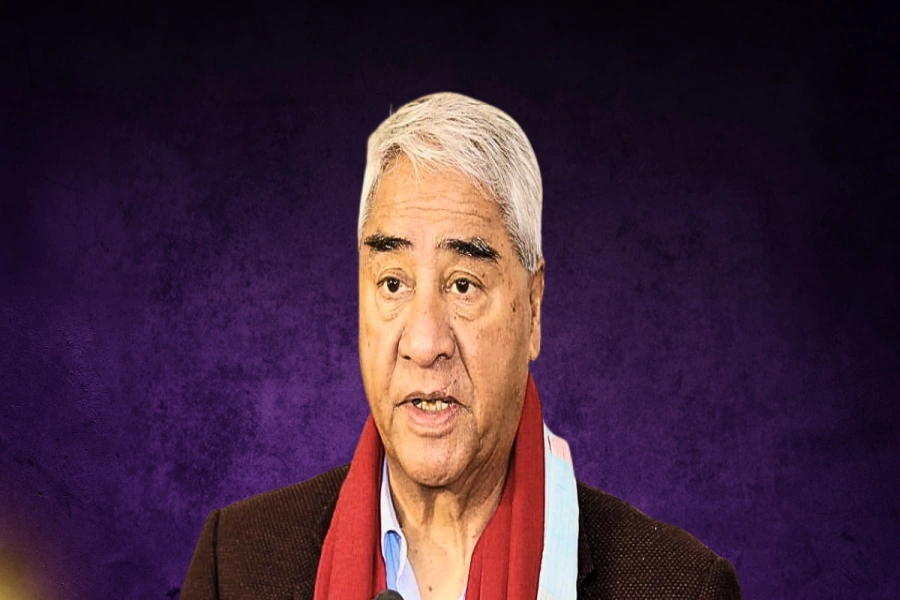
At the recent Power Nepal Summit organized by Nepal Republic Media, former Indian Secretary (Coal) Anil Swarup offered a simple yet profound insight into Nepal's electricity sector. Nepal, he observed, generates electricity when India—its principal export market—has little demand, but struggles to produce enough when India's demand peaks. His advice was equally straightforward: Nepal should prioritize storage hydropower so it can decide not only how much electricity to generate, but also when to generate it.
Swarup's observation captures the fundamental challenge confronting Nepal's power sector today.
For nearly three decades, Nepal's hydropower development has been driven by run-of-river (RoR) and peaking run-of-river (PRoR) projects. This strategy has transformed the country's energy landscape. Nepal has moved from an era of chronic load shedding and severe electricity shortages to one in which it exports surplus electricity to India and, through India, to Bangladesh during the monsoon. Installed hydropower capacity has surpassed 4,000 MW, private sector participation has flourished, and electricity has emerged as one of Nepal's most promising economic assets.
Yet that very success has created a new challenge.
Nepal no longer faces a shortage of installed generation capacity. Instead, it suffers from a shortage of reliable electricity precisely when it is needed most. During the monsoon, swollen rivers enable RoR projects to generate far more electricity than the domestic market can absorb, forcing Nepal to export surplus power at relatively low prices—or even spill water. This spillage is a loss to not only the hydropower plant but also the lakhs of Nepalis who have invested in the hydropower sector, and ultimately is a loss to the Nation. In winter, however, river flows decline sharply, electricity generation drops, and Nepal once again imports power from India to meet domestic demand. Two forces, more RoR power plants being commissioned and global warming reducing winter river flows, will only exacerbate these effects to Nepal’s detriment.
The country's energy challenge has therefore changed fundamentally. It is no longer simply about building more generation capacity and hoping that demand (either domestic or export) will simply be there at profitable prices. It is about managing, taking advantage of seasonal variability, ensuring reliable year-round electricity, and maximizing the economic value of every unit litre of water flowing through Nepal's rivers.
Storage hydropower offers the most effective solution.
Unlike run-of-river projects, storage hydropower reservoirs capture excess monsoon river flows and allow the plant to generate electricity when releasing water when electricity demand and market prices are highest in India. In doing so, they convert seasonal water abundance into dependable year-round electricity. They enhance energy security, reduce costly dry-season imports, improve grid stability, and provide greater flexibility for electricity exports.
As climate change makes rainfall patterns increasingly unpredictable, storage reservoirs will also become indispensable for managing hydrological uncertainty. Beyond electricity generation, many storage projects deliver additional national benefits through flood moderation, irrigation support, water regulation, and regional development. They are not merely power plants—they are strategic national infrastructure.
Changing dynamics in the regional energy market further strengthen the case for storage hydropower.
India is rapidly expanding its solar and wind generation capacity. This presents enormous opportunities for cross-border electricity trade, but it is also reshaping regional electricity markets. Abundant solar generation keeps daytime electricity prices relatively low, while demand—and prices—typically rise in the evening after solar output declines.
Why Store Your Data Online?

Nepal cannot fully capitalize on these market opportunities if it remains dependent solely on natural river flows. Storage hydropower would enable Nepal to export electricity when regional markets value it most, rather than simply when rivers happen to be full. That flexibility could significantly increase export earnings while making Nepal a more reliable regional energy partner.
Recognizing the importance of storage, however, is only the first step. The more difficult—and more consequential—question is which storage projects Nepal should prioritize.
With a strong electoral mandate to govern for the next five years, it is in the interest of both the Rastriya Swatantra Party (RSP)-led government and the country to focus on storage hydropower projects that are financeable, implementation-ready, and capable of delivering tangible results within its term.
Nepal certainly does not lack ambitious projects. Budhi Gandaki, Dudhkoshi, West Seti, Uttarganga, Nalgad, Naumure, Sunkoshi III, and several pumped-storage schemes together represent thousands of megawatts of potential capacity. What Nepal lacks are the financial resources, institutional strength, and technical implementation capacity to pursue all of them simultaneously.
This is where disciplined policymaking becomes essential.
Nepal's scarcest resource is no longer water. It is an execution capacity.
Large reservoir projects require billions of rupees in investment, sophisticated engineering, rigorous environmental assessments, complex resettlement programs, extensive land acquisition, transmission infrastructure, and strong project management. Nepal has yet to develop the institutional and technical capacity needed to deliver multiple large storage projects simultaneously. Moreover, the country's hydropower developers have built most of their expertise around run-of-river projects rather than reservoir-based schemes. Attempting to launch every major storage project at once would overstretch the government's financial and institutional capacity, leaving many projects delayed—or stranded—in various stages of implementation for years.
Experience has repeatedly shown that announcing projects is easy; completing them is far more difficult. The objective, therefore, should not be to maximize announcements but to maximize successful project delivery.
Project sequencing is just as important as project selection.
The government's immediate priority should be the completion of the 140 MW Tanahu Hydropower Project. Already well under construction and backed by concessional financing, Tanahu represents Nepal's best opportunity to demonstrate that it can successfully deliver a large storage hydropower project. Completing it on schedule would strengthen investor confidence, build institutional experience, and increase dry-season electricity supply.
Once Tanahu is commissioned, Nepal should turn its attention to the 670 MW Dudhkoshi Storage Hydroelectric Project.
Although Budhi Gandaki has attracted far greater public attention because of its larger installed capacity, Dudhkoshi currently offers a more realistic pathway to successful implementation. It has attracted strong interest from multilateral development partners, including the Asian Development Bank, the World Bank, the Asian Infrastructure Investment Bank, and the European Investment Bank. Its financing prospects are considerably stronger, its capital requirements are more manageable, and it is likely to reach financial close much sooner.
Prioritizing Dudhkoshi over Budhi Gandaki is therefore not a judgment on the latter's strategic importance. Rather, it reflects a simple principle: infrastructure priorities should be determined by readiness and deliverability, not by political symbolism. Real MW that are generated are of far greater value to Nepal than much more impressive paper MW that will not be implemented in a decade or two.
Budhi Gandaki should remain one of Nepal's flagship storage hydropower projects. Preparatory work—including land acquisition, resettlement, licensing, financing arrangements, and enabling infrastructure—should continue without interruption. However, given its enormous capital requirements, complex resettlement challenges, and significant execution risks, Nepal should avoid committing to full-scale construction until Tanahu is completed and Dudhkoshi is firmly underway.
Similarly, the proposed West Seti and Seti River-6 projects deserve careful but pragmatic consideration. Their greatest advantage lies in their potential to attract substantial Indian investment, thereby easing pressure on Nepal's domestic financial system. Any investment agreement, however, must safeguard Nepal's long-term interests by ensuring meaningful fiscal returns, preserving free-energy entitlements, and avoiding excessive financial risks arising from overly generous concessions.
Other proposed storage projects require differentiated approaches.
Uttarganga possesses attractive technical characteristics but faces significant environmental and protected-area challenges that must first be resolved. Nalgad should continue advancing through detailed studies, environmental assessments, and financing preparations rather than moving prematurely into large-scale capital commitments. Naumure, meanwhile, should be evaluated as a multipurpose infrastructure project that integrates hydropower with irrigation, water management, and regional development, rather than being assessed solely on its electricity generation potential.
Sunkoshi III also deserves to remain in Nepal's long-term project pipeline, but primarily as a future regional power-trade project. Its viability will depend heavily on durable export arrangements, particularly electricity demand from Bangladesh and reliable transmission access through India. Until those commercial conditions become clearer, committing significant capital to the project would be premature.
Equally important, Nepal must begin preparing for the next generation of electricity systems.
As solar power expands both domestically and across South Asia, pumped-storage hydropower will become increasingly valuable. By storing surplus electricity during periods of low demand and releasing it during periods of peak demand, pumped-storage facilities function like giant batteries, complementing variable renewable energy sources and improving grid reliability. Rather than attempting to develop several such projects simultaneously, Nepal should select a single pilot project—such as Kulekhani-Sisneri or Begnas-Rupa—build the necessary technical and operational expertise, and then scale up the technology over time. Let’s get one built first.
Not every proposed storage project, however, deserves to remain a near-term priority.
The proposed Mugu Karnali Storage Project, despite its enormous generation potential, currently lacks a credible financing pathway, requires massive investment in transmission infrastructure, and faces formidable logistical challenges. Continuing to treat it as an immediate priority risks diverting scarce financial and institutional resources from projects that have a far greater likelihood of reaching completion. Strategic discipline sometimes requires deciding not only what to build, but also what to postpone.
Ultimately, Nepal needs a clear sequencing framework rather than an ever-expanding list of ambitions.
Between now and 2030, the country's priorities should be to complete the Tanahu Hydropower Project, achieve financial close for the Dudhkoshi Storage Hydroelectric Project, launch one pumped-storage pilot, and conclude commercially sound negotiations on the West Seti project. During the following five years, Dudhkoshi should move into construction while Budhi Gandaki continues its preparatory work and projects such as Uttarganga, Nalgad, and Naumure undergo further de-risking. Larger strategic decisions on Budhi Gandaki and Sunkoshi III can then be revisited as financing conditions improve and regional electricity markets continue to evolve.
Nepal has already demonstrated that it can successfully develop run-of-river hydropower. The next decade will determine whether it can achieve the same success with storage hydropower.
The country's energy future will not be measured by the number of projects announced, studied, or included in government plans. It will be judged by the number of reservoirs completed, the amount of firm electricity they deliver during the dry season, and how effectively they transform Nepal from a seasonal exporter of electricity into a reliable supplier of clean energy throughout the year.
Storage hydropower is no longer just another option in Nepal's energy portfolio; it has become a national imperative. Realizing that vision, however, will require more than building reservoirs. It will demand disciplined policymaking, prudent allocation of scarce financial and institutional resources, and the recognition that Nepal's greatest constraint is not the abundance of its rivers but its capacity to execute complex infrastructure projects.
If policymakers embrace that principle, storage hydropower can become the foundation of Nepal's energy security, regional competitiveness, and long-term economic prosperity.
The author is the Editor of Republica Daily.