It came across not as something he didn’t think was important, but rather something he was willing to sacrifice in exchange for economic growth, a short sighted idea from a leader who is perceived to be a lot more thoughtful than that. [break]
At points during the extended conversation, he also contradicted himself on the issue but conceded his unfamiliarity with the Intergovernmental Panel on Climate Change, the largest international body that works on climate change issues.
Next week, when Prime Minister Baburam Bhattarai arrives in New York as the head of the Nepali delegation at this year’s United Nations General Assembly, what will his views on the environment be? On September 20 the UNGA will be hosting a high-level meeting on the topic ‘Addressing desertification, land degradation, and drought in the context of sustainable development and poverty eradication.’ New York City itself will be hosting its Climate Week from September 19-26. And the IPCC and other environment groups and agencies will be vying for the world’s attention at the UNGA. Because of our Himalayas, no Nepali leader can afford to shy away from the issue.
21st Century Socialists: PM Bhattarai, meet President Correa
Perhaps PM Bhattarai, who portrays a modern Marxist persona, could meet with President Rafael Correa of Ecuador, who presents himself as a 21st Century Socialist, while they are both in New York at the same time.
Like Nepal, Ecuador also has a large indigenous groups and the Confederation of Indigenous Nationalities of Ecuador is a key political force in the country. Under President Correa Ecuador started working on its 20th Constitution (20th!) in the fall of 2007. In September 2008, more than 63% of voters approved of the new version. That Ecuadorian constitution is the first in the world to declare Rights of Nature.

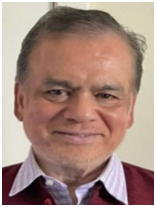
PM Baburam Bhattarai as Finance Minister in Washington DC in 2008. (Photo: Kashish Das Shrestha)
In 2008, PM Bhattarai told me “Remittances, tourism are sectors driving Nepal’s economy… until we modernize agriculture we cannot have sustainable development.”
He added: “We shouldn’t give undue importance to rumors that big hydro projects will lead to ecological degradation.”
By 2008 the Socialist President of Ecuador had passed a constitution that said: “Energy sovereignty shall not be achieved to the detriment of food sovereignty nor shall it affect the right to water.”
Here is something else PM Bhattarai could speak to President Correa about: Ecuador’s Yasuni National Park. Under that park, there is almost 1 billion barrels of crude oil worth almost $7-10 billion. President Correa’s socialist government is trying to find a way to leave it as it is.
““To extract oil on that scale from Yasuní would lead to contamination, deforestation, extinction of cultures and destruction of social structures. It would need a vast infrastructure including roads, river ports, tracks, airstrips. Villages would have to be constructed, pipelines laid and millions of tons of contaminated waste buried,” Oil Minister Alberto Acosta said.
Nepal is geologically sensitive, geographically small, and tourism and agriculture are critical as PM Bhattarai himself acknowledges. Instead of giving up our farmlands, forests and mountains, maybe it would not be too far fetched to consider banning all industrial extractive mining (uranium, hydrocarbons etc) in Nepal and find other avenues of sustainable development.
Ideologies, and Ideas:
There is no shortage of powerful ideology or rhetoric in the PM’s party; the PM himself is an example of that. But it would be problematic for Nepal if the PM, any PM, is unable to propose or seek ideas to address what has been defined as one of the most critical development, security, economic and “people’s” issue of our time, the world over. In Nepal, what the people hope delivered politically within our boundaries are intricately tied to nature and its sustainability within and outside of the federal states we hope to have, and the political borders that outline the Nepali territory. Just ask PM Bhattarai’s good friend and esteemed scholar Pitamber Sharma, Ph.D.
International Day for the Preservation of the Ozone Layer
Today is International Day for the Preservation of the Ozone Layer. But it comes just couple of weeks after President Obama was forced to drop plans for a stricter ozone pollution standard, disappointing environment-liberal-progressive groups in America. However, in July the president did announce requirements for automakers to make the largest increase in gas mileage ever. The major auto manufacturers in America supported his agenda, and the environment-liberal-progressive groups were pleased.
PM Bhattarai made a lot of news by picking a Nepal made vehicle as his official chariot. But as the nation’s leader and on the occasion of Preservation of the Ozone Layer day, he could consider taking it further by revisiting pollution rules in Nepal and policies regarding electric vehicles (EVs). It’s okay if we have 18-hour per week load shedding now. We can use the ‘progressive’ policy the PM puts in place now at a future date when our energy crisis isn’t so bad.
EV’s would not only be lighter on NOC and the national treasury, but would go a long way in clearing up the air quality in Kathmandu and other rapidly growing urban centers around the country. Okay, maybe he could at least get those digital air-quality readers in different parts of the city working again?
Here in America,
In the American political climate of today PM Bhattarai’s stance on the environment issue places him rather oddly with the right-wing radical Tea Party groups and their corporate sponsors from the energy and mining industry who promote an anti-tax, anti-environment regulation, and anti-government spending agendas.
These groups oppose President Obama’s social entitlement programs like healthcare, they demand many federal agencies and offices be dissolved, and they oppose the president’s plans of infrastructure development programs to boost the economy. The Members of Congress elected largely by the Tea Party members are actively working to dismantle the Environment Protection Agency and repeal healthcare.
As an insult, Tea Party members have been calling President Obama a “socialist” and “communist” ever since he took office. Now if PM Bhattarai just shifted his position on environment, he could take those words as quite the compliment and find a fellow comrade in President Obama. Along the way, he would also be doing a whole lot of good for the people.
Related story
PM Oli, Indian PM Modi meet in New York

-1779250876.webp)


_20230921083212.png)