KATHMANDU, July 22: "It is unfortunate that Nepalis still lack an organization capable of fulfilling the aspirations of the modern age. Some local organizations with limited objectives certainly exist, but the need of the time is for an all-India organization that also represents Nepal."
This was part of an appeal issued by BP Koirala in 1946, calling for the formation of a political party. Nearly eight decades later, the Nepali Congress (NC), founded by BP Koirala and his colleagues, is observing the 44th anniversary of his death on Wednesday.
While party leaders and cadres will pay floral tributes to BP and praise his legacy, the party itself is facing one of the deepest crises in its history. Critics say NC leaders have placed personal ambitions above the interests of the party, the people and the country.
Internal rivalries, fear of losing political ground and leadership struggles have pushed the party to the brink, they argue. The younger generation faces a crisis of legacy, while senior leaders remain locked in disputes over legitimacy. As a result, the party that shaped Nepal's democratic journey for nearly eight decades has become increasingly directionless.
Instead of focusing on strengthening the party at a difficult time, much of the leadership is preoccupied with retaining influence and consolidating control.
The divisions are on full display even on BP Memorial Day.
China has legitimate reason to be concerned with internal situa...

The establishment faction has organized a Green Run and other commemorative events, while the rival faction is holding a separate program at Nepal Academy. The internal rift widened after the Gen Z protests of September 8 and 9 and deepened further following the party's special general convention in January, after which one faction effectively moved outside the party's mainstream.
Former party president Sher Bahadur Deuba and many senior leaders boycotted the convention. They have since opened a separate contact office at Chundevi and have been running parallel political activities.
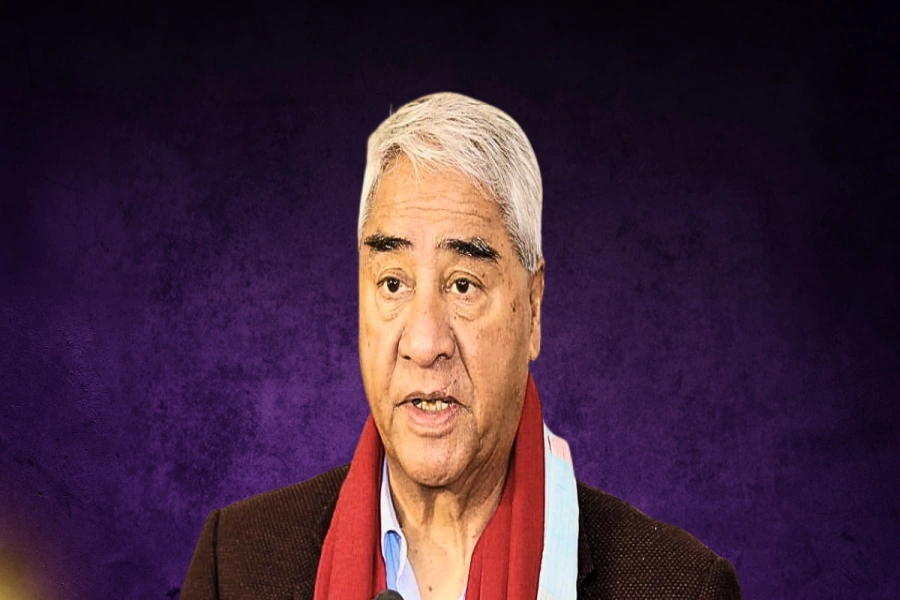
Following Wednesday's memorial program, the dissident faction is preparing to convene a national gathering. Senior leader Shekhar Koirala, who had stayed away from previous meetings of the dissident camp, is also expected to attend, a move many believe could deepen the split.
Vice President Bishwa Prakash Sharma, however, insisted the party remains committed to resolving its internal disputes.
"BP belongs not only to Congress but to everyone who respects democratic values," Sharma told reporters. "Anyone can organize programs in his memory, and Congress will not criticize such efforts."
Observers note that Nepal achieved many of its major political transformations when NC leaders worked together. They compare the party to honeybees, which collectively produce honey but can also destroy themselves when they turn their stingers on one another.
Many believe today's NC has increasingly become consumed by infighting, with leaders attacking each other instead of working toward reconciliation. Respect, trust and the sense of family that once defined the party have steadily eroded. Along with BP's ideals and principles, critics say the spirit of friendship and brotherhood within NC has also faded.
After suffering electoral setbacks in the March 5 elections, analysts argue the party should be rebuilding public confidence through unity. Instead, they say, mistrust continues to grow, pushing the party closer to division.
Deuba says he will return to Nepal
Former NC president Sher Bahadur Deuba has said he will return to Nepal soon after completing medical treatment abroad.
In a statement issued on the eve of BP Memorial Day, Deuba warned the government against pursuing what he described as politics of revenge. Deuba, who has been in Hong Kong since leaving the country before the March 5 elections, said he is preparing to return to continue defending democracy, the Constitution and the rights of the people.
Reflecting on more than six decades in politics, he said his commitment to democracy has never wavered.
Deuba also accused the government of attempting to weaken the opposition by putting pressure on the independent judiciary and constitutional bodies.
He called for combining the experience of veteran leaders with the energy and creativity of the younger generation to advance nation building. Recalling BP Koirala's political ideals, Deuba said safeguarding democracy is a shared responsibility because any weakening of democratic institutions ultimately threatens national unity, sovereignty and independence.