In 2009, however, a different story unfolded, which is important to consider when thinking about future policies. There was a failure in winter crops in hilly and mountain districts. According to one estimate, this year 575,000 tons of major crops (500,000 tons of paddy and 75,000 tons of maize) are expected to be lost due to the late monsoon, flooding and landslides and, as a result, worsen food deficit. The information provided by the Department of Hydrology and Meteorology depicts that rainfall during monsoon last year was 60 percent less than the previous year. The government officials have predicted a shortage of around 132,000 tons of food in the country.
As there was a reduction in plantation area and productivity was low, as explained above, preliminary estimates show paddy production declining by 11.1 percent and the second major cereal crop, maize, by almost 4 percent. These two products together contribute 10 percent (paddy 7.5 percent) share in GDP and about 27.5 percent (paddy 20.75 percent) in agricultural outputs. The actual growth rate, therefore, cannot be expected to exceed 4.2 percent. It is a message for future priority spending and determining the size of nations’ annual budget.
Late monsoon, flooding and landslides ate into Nepal’s agricultural productivity last year deeply affecting economic growth. The actual growth rate, therefore, cannot be expected to exceed 4.2 percent in this fiscal year.
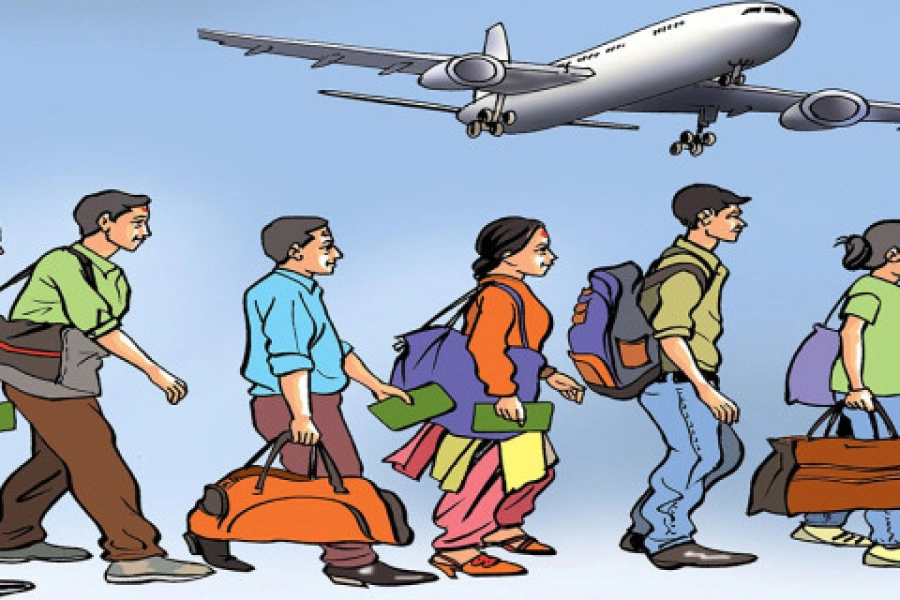
Despite the inflated size of the national budget in 2009/10, the amount set aside for agriculture has not increased proportionately. Whatever had been committed (Rs 25 billion to boost agro-production during the three-year plan) for increasing production and productivity of rice, maize and wheat, the critiques complain that it was all of a sudden aborted because of the inadequate budget, which has undermined the significance of agriculture in food security. Such decision has been made at a time when threats are emerging from rapid urbanization as youths are leaving leading agricultural districts and migrating to urban areas and/or overseas job destinations. This trend is creating shortages in agricultural workforce in rural areas, which contributes to almost 30 percent in the GDP.
The government revenue is at a relatively higher growth path. For instance, during the first five months, revenue mobilization grew by 36.1 percent to Rs 58.60 billion compared to an increase of 33.1 percent. The foreign cash grant has increased to Rs 9.74 billion from last year’s Rs 5.69 billion. The following table gives latest available data in the fiscal sector.
Fiscal Sector (Based on first five months data)
| Amount (Rs in million) | Percent Change | ||||
| 2007/8 | 2008/9 | 2009/10 | 2008/9 | 2009/10 | |
| Expenditure | 47260 | 48454 | 63133 | 2.5 | 30.3 |
| Recurrent | 30949 | 32333 | 45598 | 4.5 | 41.0 |
| Capital | 7426 | 4879 | 5529 | -34.3 | 13.3 |
| Principle repayment | 6507 | 6326 | 3953 | -2.8 | -37.5 |
| Resources | 37454 | 50626 | 70415 | 35.2 | 39.1 |
| Revenue | 32360 | 43061 | 58601 | 33.3 | 36.1 |
| Foreign grants | 3423 | 5692 | 9737 | 66.3 | 71.1 |
| Foreign loan | 2239 | 2056 | 1797 | -8.2 | -12.6 |
| Deficit(-)/Surplus(+) | -9806 | 2171 | 7282 | -122.1 | 235.4 |
Source: Nepal Rastra Bank, Research Division, December, 2009
The above table shows that the real sector is also not very encouraging and fiscal scenario looks mixed. External sector is deteriorating. According to Nepal Rastra Bank, during the first five months of FY 2009/2010, government spending surged by 30.3 percent to Rs 63.13 billion as compared to 2.5 percent on account of remarkable increase (41 percent) in recurrent expenditure. Such growth has also been contributed by the upward revision in salary and allowances.
Available figure for the first three months reveal export of goods declining to 16.8 percent as against a growth of 25.9 percent. The export-import ratio declined sharply to 17.8 percent compared to 27.8 percent. Trade deficit widened. Within the first three months, imports from India alone jumped to 133 percent. From Rs 47.2 billion last year, the purchase of IC increased to about Rs 65 billion within the first five months of FY 2009/10. If this trend continues, Nepal’s purchase of IC by selling US dollars in India’s capital market will exceed IC 150 billion by the end of this fiscal year. Isn’t this scary?
The import of gold exceeded Rs 15 billion within three months. It is often complained even by responsible government authorities that no details on gold import figure is made available on time from the airport counter. Therefore, the amount of actual import may even be higher than reported. Import of vehicles in three months was worth Rs 6 billion. The higher level of consumption, especially on the unproductive sectors such as land and housing, has increased potential risk to financial sector stability. The bad signal is also declining workers’ remittances, which decelerated to 11.1 percent as compared to 67.3 percent growth the previous year. Nepal experienced current account surplus of Rs 4.31 billion last year but now declined to Rs 11.38 billion. It was largely because of the inability of remittance flow to fulfill increased trade. The overall BOP deteriorated sharply, which remained at Rs 19.45 billion as against a surplus of Rs 7.70 billion. Having said this, it is important to note that Nepal always experienced a comfortable level of foreign exchange holding in the past. However, the five months data exhibits a fall indicating capital adequacy only enough for seven months of import.
Nepal’s economy has gone too far to correct damages. In theory, a troubled economy provides consumers with opportunities for negotiating and bargaining. This is not happening in Nepal. The ailing economy should have empowered the customer to ask for reduced price for a product because the economists do not consider haggling as demeaning. But this practice again is not Nepal’s priority. Either the high growth or the downturn scenario is both inelastic to the market behavior since in each of these cases the business is as usual. This is the result of political instability and policy setbacks.
Again, in theory, negotiating salary during troubled years is often successful (They are given rise or even promoted) when the employees do not focus on more money and instead emphasize on how they can benefit the employers, focus on employers’ mission and purpose. This is not really needed in present day Nepal at all because bargaining with lopsided demand from the workers have always worked in raising the salary and perks as the unions work like the sub-system of influential political parties. Therefore, since known international practices do not work in Nepal to correct the ailing economy, counter theory policy needs to be devised.
bishwambher@yahoo.com
Related story
Beauties, build the thick skin