KATHMANDU, Feb 12: On the 35th anniversary of its establishment, the Commission for the Investigation of Abuse of Authority (CIAA) delivered a stark warning: unless state administrators eliminate middlemen from every sector, good governance will remain merely a slogan.
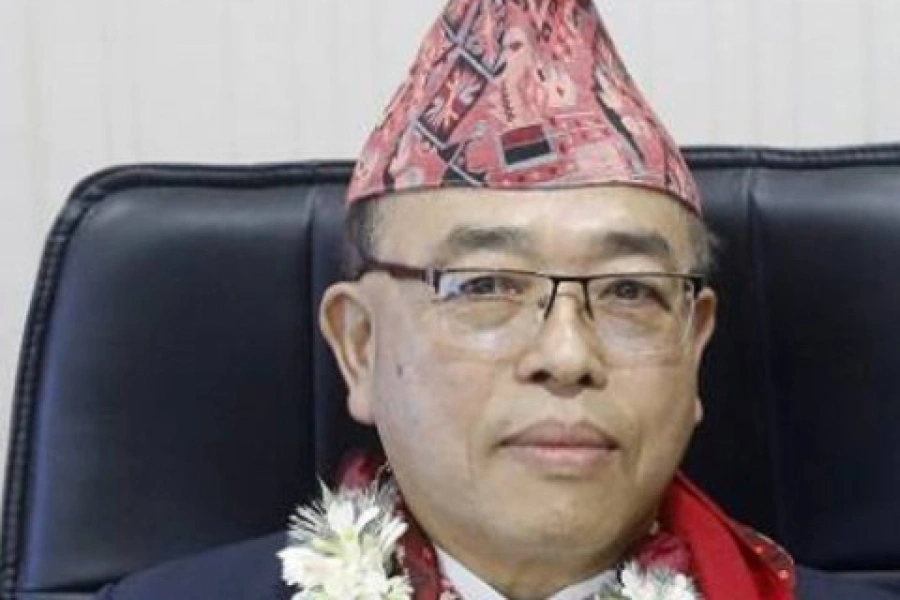
Speaking at a ceremony attended by President Ram Chandra Paudel, Vice President Ramsahay Yadav and Prime Minister Sushila Karki, CIAA Chief Commissioner Prem Kumar Rai said intermediaries have entrenched themselves within the state machinery, dominating service delivery and obstructing effective governance.
Rai explained that while middlemen previously appeared mainly in minor tasks at frontline offices, over the past five to ten years their influence has spread to critical areas such as budget formulation, project planning, appointments, transfers, promotions and even government reshuffles. “Middlemen have effectively taken control of government and its institutions, making good governance impossible,” he said.
According to the CIAA, budget allocation is among the most compromised areas. “Investigations reveal underfunded multi-year projects, arbitrary budget allocations without feasibility studies or proper needs assessments, and the retention of unspent funds for redistribution mid-year,” Rai noted.
Where there is government, there is corruption!

Public institutions often make purchases without proper procurement plans, restrict competition, or bypass competitive bidding entirely. The procurement of medical equipment, medicines, IT software and devices has been particularly vulnerable to misuse due to limited competition and large investments.
The commission further highlighted unnecessary construction, the purchase of unused materials or software without planning or cost-benefit analysis, and the immediate initiation of new procurements as factors that obstruct governance. Although government projects should ensure operational use and functionality, these standards are widely ignored.
Investigations also uncovered weaknesses in contract management, including unjustified contract extensions, failure to provide timely instructions to construction firms, and poor record-keeping of delays caused by contractors or consultants. These lapses often lead to significant financial losses when contractors claim compensation. The CIAA warned that a lack of accountability among officials, project heads, contractors and consultants perpetuates these problems.
The exploitation of natural resources—particularly riverine and mineral resources—frequently breaches legal standards, circumvents rules in mining or industrial operations, and results in delayed revenue collection, further undermining good governance.
Persistent issues include officials ignoring rules, laws, procedures, standards and citizen charters; allowing middlemen to interfere in service delivery; avoiding accountability; delaying decisions; making biased appointments; promoting staff without criteria; misusing vehicles and fuel; and failing to audit institutions. CIAA complaint investigations consistently reveal such practices.
To combat corruption, the CIAA has issued around 428 recommendations across 12 thematic areas covering 24 ministries and institutions. Yet implementation remains weak. “The same offences recur every year, forcing us to repeat recommendations. Legislative discussions are insufficient, and executive bodies show little urgency in enforcement,” the CIAA said.
The commission also noted that some officials attempt to shirk responsibility by citing CIAA recommendations without taking action. “Our suggestions are meant to correct operational flaws, enhance service delivery and promote development—not obstruct governance. Ignoring laws while claiming that recommendations hinder progress must stop,” the CIAA stressed.
The CIAA reminded all state organs that anti-corruption measures are central to overall governance reform and must be prioritised across sectors. “Officials must recognise that corruption control is a national responsibility. Political systems, achieved through citizens’ sacrifices, exist to promote economic and social development, which requires integrity from all stakeholders. To meet citizens’ expectations, all must adopt governance-oriented conduct,” it said.
Finally, the CIAA urged an end to narrow, partisan, self-interest-driven attitudes. Officials must not remain indifferent while holding positions of responsibility, and those who claim to champion good governance must fulfil their duties. “It is critical to stop shielding relatives or close associates from corruption charges while complaining that others face no action,” the CIAA emphasised.