

According to Bed Khadka, chief of ghariyal Breeding Centre inside the CNP, there were altogether 658 eggs in 20 different nests of ghariyals this season. [break]
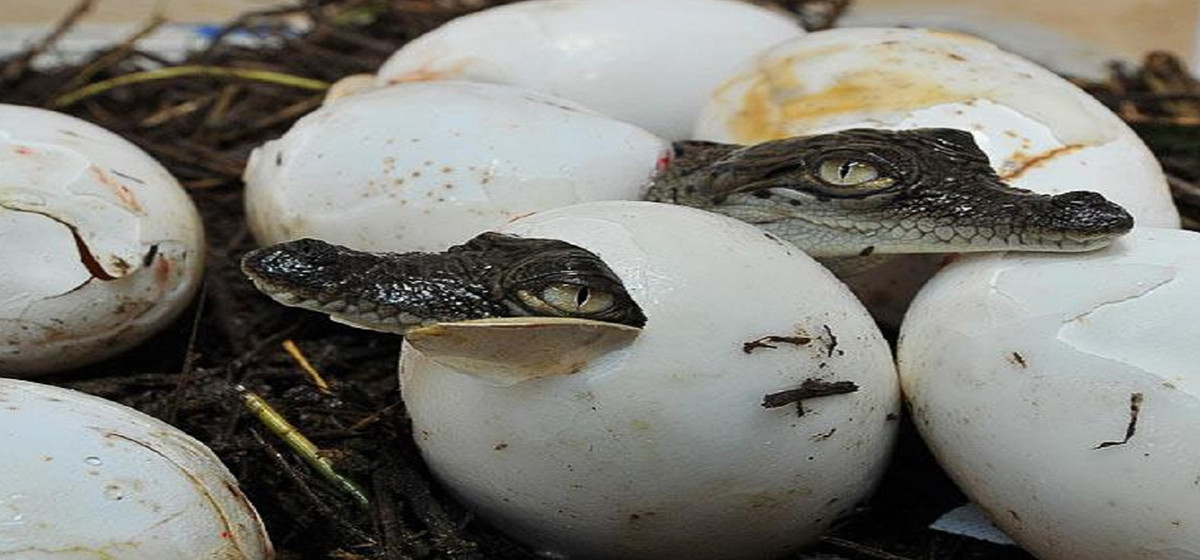
However, baby ghariyals came out of only 262 eggs. Worse still, almost 90 per cent of new ghariyal babies appear very weak and unhealthy, Khadka said.
“This is the worst phase in ghariyal breeding in the last ten years,” he said.
Whether in natural settings or at breeding centers, ghariyals face difficulty in hatching eggs. Khadka had spotted a ghariyal nest containing 40 eggs on the bank of the Narayani River near Amaltari of Nawalparasi district. “All the eggs perished there,” said Khadka. “Not a single ghariyal baby came out of the 40 eggs.”
Ghariyals usually lay eggs in April. Baby ghariyals come out of eggs in mid-June. Ghariyals find 30 degree Celsius temperature perfect for hatching eggs. However, temperature hovered around 40 degree Celsius in Chitwan almost every day in June.
“As temperature remained high, sandbanks where the ghariyals had nested dried up,” said Khadka. “We could not protect the eggs even by watering sandbanks.”
Ghariyals are listed as endangered species in Nepal. As of now, 861 Ghariyals have been released in different rivers across the country. But, when a counting was conducted last year, only 102 ghariyals were found.
“Ghariyals need fresh water to grow up well,” said Ramprit Yadav, former warden of the CNP. “The fact that ghariyal´s population is declining indicates that our rivers are getting increasingly polluted.”
Related story
Vulture breeding center at CNP to close down







-1782782519.webp)


