

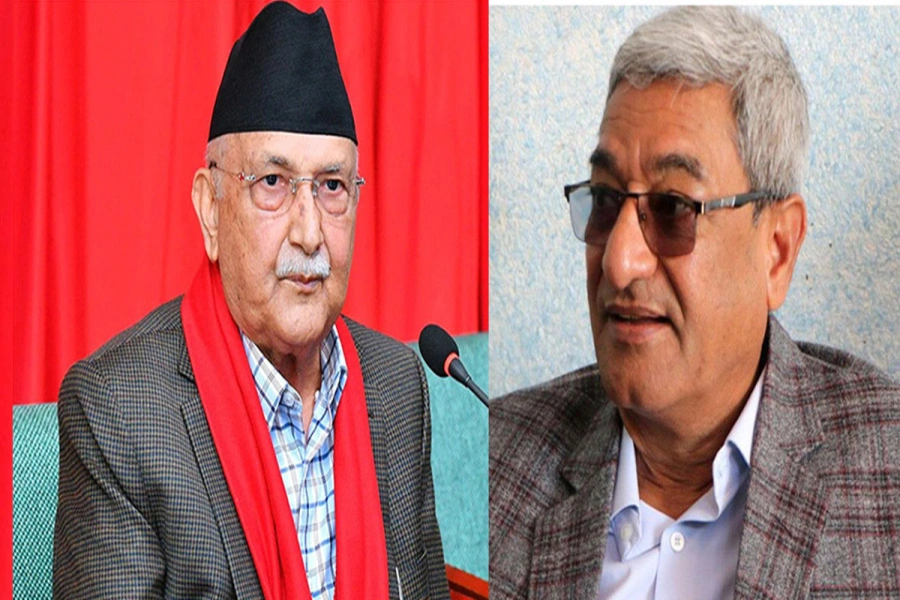
KATHMANDU, March 26: A government probe into the deadly September 8–9 Gen Z protests has found that security forces used excessive force and that failures in political and administrative leadership worsened the crisis, according to a leaked report that has surfaced nearly three weeks after its submission. The commission has recommended disciplinary action against ousted Prime Minister KP Sharma Oli, the then Home Minister Ramesh Lekhak and then Inspector General of Nepal Police Chandra Kuber Khapung as well as several senior officials of Nepal Police and Armed Police Force.
The findings, contained in a report prepared by a commission led by former Special Court Chair Gauri Bahadur Karki and submitted to the government on March 8, were first published by Jana Astha Weekly on Wednesday. The report has since been widely circulated and replicated by major media outlets, even as the government has yet to officially release it.
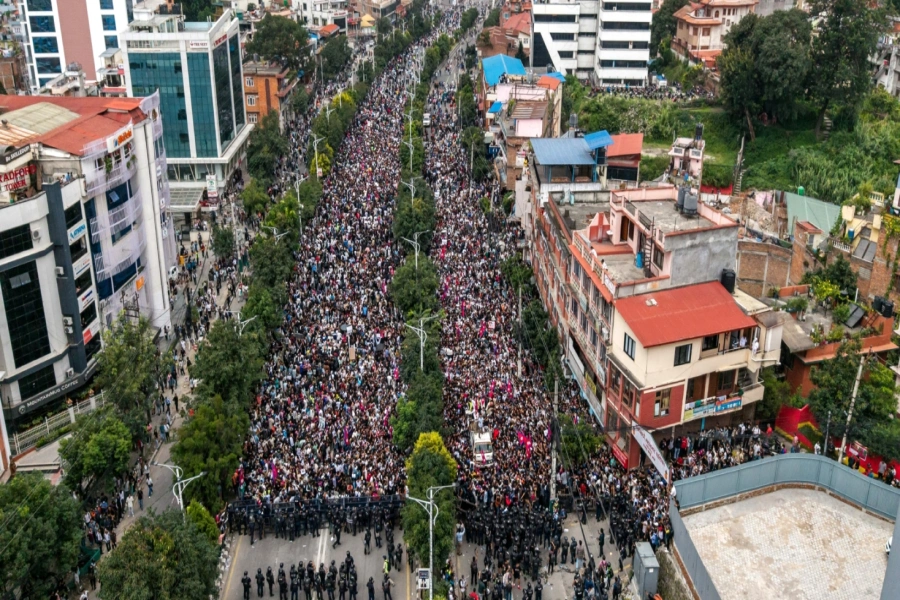
The long-awaited report comes amid growing public frustration over the lack of accountability for the violence that left at least 74 people dead, including 19 youths reportedly shot on the first day of protests. The demonstrations, which escalated rapidly over two days, culminated in widespread unrest, with key state installations such as Singha Durbar, Sheetal Niwas and the prime minister’s residence set ablaze, alongside extensive damage to public and private property across the country.
The unrest had forced then prime minister KP Sharma Oli to flee Kathmandu by helicopter, while lawlessness persisted until the Nepali Army stepped in to bring the situation under control.
Despite the scale of the violence and public expectations of punitive action, no one has been held accountable so far.
According to the report, excessive force was used during crowd control operations, while coordination between command structures and field units remained weak.
The report also points to failures in situational assessment and decision-making, raising broader concerns about the operational readiness and command structure of the country’s security agencies.
Gen-Z Protest: Amnesty International accuses govt of deadly exc...
Reactions within the security establishment have been mixed. Some officials argue that recommending disciplinary action for personnel who acted under existing legal frameworks could weaken morale, while others stress the need for accountability and adherence to human rights standards.
Beyond the security agencies, the commission has highlighted systemic weaknesses at the political and administrative levels. It cites delays in decision-making, lack of institutional coordination and the influence of political interests as key factors that aggravated the crisis.
The report notes that intelligence warnings about a possible escalation were not effectively acted upon, and that the absence of timely high-level security deliberations limited the state’s ability to respond strategically.
Political leadership has also come under scrutiny, with the commission pointing to the absence of clear policies, long-term planning and transparent decision-making. It concludes that such shortcomings left administrative mechanisms ineffective at a critical moment.
The findings come as protests have continued in Kathmandu in recent days, with demonstrators demanding that the government make the report public and take action against those responsible for the deaths.
Army Chief proposed two options to PM Oli during protests
Chief of Army Staff Ashok Raj Sigdel told the Karki-led commission that he had presented then prime minister KP Sharma Oli with two options at the height of the protests—either pursue a political solution, including resignation, or constitutionally deploy the army.
According to the leaked report, Sigdel said he offered the suggestions during a meeting at the prime minister’s residence on the morning of September 9, after the situation escalated.
He said the army was prepared to take control if the cabinet made a formal recommendation in line with constitutional provisions, but stressed that the military cannot act independently without such a decision.
Sigdel also noted that intelligence agencies had warned of a possible escalation during a Central Security Committee meeting on September 7, but no formal meeting of the National Security Council was held until September 9.
By then, he said, the home minister had resigned and there were expectations that the protests might subside, limiting the likelihood of immediate military deployment.
Army Chief Sigdel added that the army instead focused on protecting key infrastructure, including Singha Durbar, the President’s Office, the prime minister’s residence, airports, fuel depots and prisons. He said that army fire brigades played a proactive role to control fires at the National Data Center and the Ministry of Finance data center in Singha Durbar.
APF chief denies ordering firing
Inspector General of Armed Police Force Raju Aryal told the commission that he did not order security personnel to open fire during the protests.
In his statement, Aryal said that although there was no precise prior intelligence, he had anticipated potential security challenges and instructed heightened vigilance.
He maintained that decisions taken by personnel on the ground were based on laws, standard operating procedures and situational assessments, and that no direct order to fire was issued from his office.
Aryal said maximum restraint was exercised during crowd control, although he acknowledged that some aerial firing had taken place. He also said efforts were ongoing to improve coordination among agencies and investigate internal lapses.









-1782782519.webp)


