ASIA-PACIFIC REGION
The Asia-Pacific region experienced the impact of financial meltdown after the fourth quarter of 2008. It can be hoped that if the world economy does well in the remaining months of 2009, early recovery of the region’s economy is possible. However, the countries that offer market to developing nations are still in debt; therefore, creation of demand in these markets is not easy. Economies that rely on exports have already witnessed double-digit declines. The early recovery of the Asia-Pacific region will not be smooth as long as there exists growing pressures for protectionist measures in developed countries.
Global economic growth cannot be a cause of cheer for Nepal as the country was experiencing low growth rate even before the world was hit by the financial crisis. Low growth rate exists not only in terms of GDP but also in terms of per capita GDP.
NEPAL
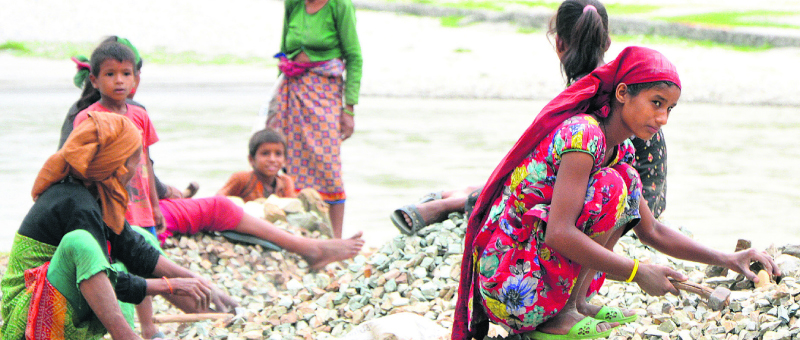
Nepal’s sustainable and so-called inclusive growth through macroeconomic reform programs is under scrutiny. People are deprived of life’s basic necessities. Affordable and quality healthcare and education are unavailable. The majority of the working poor face food insecurity. The global financial crisis has contributed to market failure. Currently, eight million Nepalis are struggling for food security. About 35 percent of the population in Nepal are bearing the brunt of insufficient food supply.
However, the decline in oil prices that we witnessed in the recent past provides some glimmer of hope. Crude oil price came down to US$52 per barrel in the first half of 2009 from US$97 per barrel in 2008. Now, it has risen to US$80 per barrel. If the price declines again, it is expected to reduce food prices significantly.
World Food Programme has conducted a global analysis to identify countries likely to be vulnerable to increased food and fuel prices and, therefore, likely to see the biggest changes in their food security profiles. Nepal had high levels of food insecurity even before the food and fuel price hikes as it relied heavily on imported food and fuel.
Food Outlook, a bi-annual commodity publication of FAO states: “If the current price volatility and liquidity conditions prevail in 2008/09, plantings and output could be affected to such an extent that a new price surge might take place in 2009/10, unleashing even more severe food crises than those experienced recently.” The current rise in food price can be expected to further widen inequality. The government has to play a key role during such times to protect the vulnerable groups from adverse effects.
Safety nets are essential to safeguard the vulnerable. Public social safety nets are normally classified into formal and informal. In the formal safety nets, individual’s access to economic and social support is guaranteed by law but in informal safety net schemes, there is the likelihood of support to individuals for attaining or remaining above the designated minimum standard of living without any legal guarantee.
Global economic growth cannot be a cause of cheer for Nepal as the country was experiencing low growth rate even before the world was hit by the financial crisis. The country experienced long periods of low growth and is consistently and relatively behind its neighbors in the region. Low growth rate exists not only in terms of GDP but also in terms of per capita GDP. Despite the introduction of several economic reforms, especially after 1990, the economy continues to be the weakest in the region.
Therefore, rather than being too optimistic of becoming a beneficiary from the so-called global recovery, Nepal should revisit the safety net issues. There are a few options. All scarce resources should be allocated so as to maximize economic growth, the benefits of which will eventually trickle down to the poor or a part of these resources should be transferred to the poor to improve and maintain their living standards during the process of economic growth. A third option is to give the poor access to assets (such as land) that provide them with a source of economic growth, based on their absolute advantage i.e. labor.
Corporate boardrooms heaved a great sigh of relief since capitalism is staggering out of its worst recession after the 1930s. Banks have started maintaining the required level of capital adequacy. Newspaper articles are over flooded claiming that business sales have gone upward and profits have begun to rebound.
The million dollar question is: Is the recovery sustainable? After the dramatic meltdown of the world’s largest financial institutions in Wall Street, unemployment rate exceeding 1930 levels, historic contraction of world business that in the US alone claimed the jobs of 10 million people and forced nine million others to take up part-time work, how can one trust that the market distortion can be so easily corrected?
bishwambher@yahoo.com
Related story
The crisis of 2020


-1781762832.webp)