In a recent opinion essay in The Kathmandu Post, Tashi Lhazom—a climate justice activist, a prominent voice during the September Uprising, and an aspiring politician—shared her frustrations with electoral democracy. Describing the challenges of campaigning in the remote district of Humla, where she was born and from where she is seeking voters’ trust in the upcoming March election, Lhazom expressed doubts about the real implications of the current system.
“Voting in certain areas in Humla is neither safe nor private. In some places, voters are not allowed to exercise their rights because their votes are cast by a relative, a fellow villager, or someone with political authority. They are forced to comply out of fear of future repercussions. Exercising democratic rights becomes a mere façade. Preying on the political illiteracy of voters, established and dominant political forces continue to prevent people from accessing their constitutionally guaranteed rights.”
She continued:
“If political allegiance becomes the only meaningful way for many Humlis to access the Nepali state, then it’s difficult for them to place their aspirations in someone like me, who cannot guarantee them personal benefits. Changing political candidates and ideologies does not alter the existing structures of how politics functions here.”
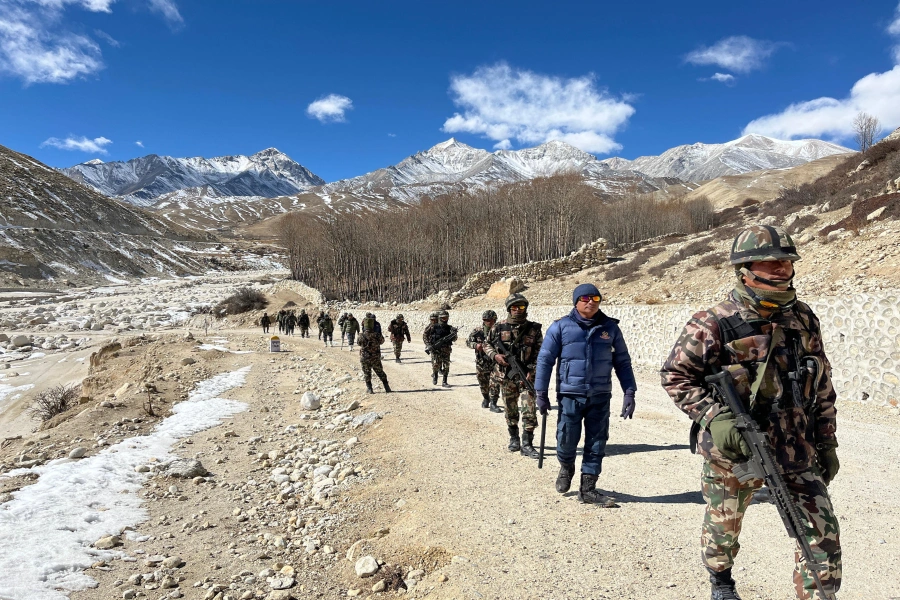
“The most heartbreaking incident I faced was when voters in one of the most remote villages outright refused to vote. They said they felt betrayed after years of identical promises from different faces. Their demand was simple: roads. And their demand is justified because it takes one and a half days of walking uphill to reach the village. I find myself questioning the promise of electoral politics. Perhaps voter disillusionment reflects the political culture fostered by dishonest leadership.”
Lhazom is justified in feeling demoralized by the way electoral politics operates.
Corruption weakens democracy

Yet her diagnosis of the deep malaise characterizing the current ballot-based model of democracy—the cornerstone of liberal democracy—requires deeper reflection.
Its shortcomings cannot be explained solely by a lack of integrity and accountability among large sections of politicians. Certainly, the absence of moral and ethical leadership within much of the political class is at the root of many of the problems affecting Nepal’s politics. Corruption, nepotism, and politically motivated exchanges of favors have formed the foundation of a system that has repeatedly failed the people.
Following the events of last September, there is hope that the upcoming elections will usher in a renewal of the political class. The assumption is that new faces—whether from newly formed parties or reformed established ones—could significantly alter the status quo.
There is little doubt that a new generation of leaders, including younger candidates like Lhazom and many members of so-called Generation Z who are contesting elections, could deliver a more effective and inclusive form of politics.
Yet Lhazom’s words compel us to question the pillars of the current electoral system.
From the perspective of a candidate seeking public trust, vote-based democracy—mainstreamed globally since the end of World War II—has evident limitations. For many campaigning politicians, it becomes a form of “promise-driven politics,” where candidates make pledges they are unlikely to fulfill.
Running for a seat in Parliament is not the same as contesting an executive position at the local or provincial level. It is these executive layers that are better positioned to bridge the gap between democratic ideals and people’s everyday aspirations.
While a seat in the federal parliament can help channel funding to constituencies, this mechanism is also problematic. The so-called pork-barrel style of politics may yield short-term benefits and occasionally support long-term projects that genuinely improve lives. However, these remain exceptions rather than the rule.
Voters are well aware of the shortcomings of development initiatives tied to constituency development funds, where sitting MPs wield broad discretion over resource allocation. Despite controversies and reform attempts, even the latest iteration of these funds remains deeply problematic.
For this reason, those elected in March should pursue a model of democracy that allows greater direct citizen involvement.
Completely abandoning representative elections would be impractical and unfeasible. Instead, what is needed is a comprehensive effort to strengthen the current vote-based system while moving beyond its limitations. Stronger safeguards to ensure transparency, reduce corruption, and enhance effectiveness will be essential.
However, young politicians like Lhazom—if elected—should also be creative and bold in advancing a more deliberative system. Around the world, various models of participatory democracy—such as citizens’ assemblies and participatory budgeting—have demonstrated how citizens can meaningfully contribute to decision-making.
These initiatives are increasingly mainstream, enabling citizens to co-decide on issues that directly affect their lives.
Can Nepal move beyond a promise-centered democracy, where candidates compete through ever-larger pledges that often go unfulfilled, toward a system that complements voting with structured citizen participation?
The country must begin laying the groundwork for deliberative democracy. This requires understanding what deliberative democracy entails and how it could be adapted to Nepal’s context.
Nepal’s local social fabric—rooted in ancient and diverse traditions—already possesses consultative and participatory elements that could be integrated into formal political processes. What is needed now is a clear strategy and action plan.
The upcoming House of Representatives could establish a working group tasked with preparing a roadmap for introducing deliberative practices into the political system. Learning from international and local experiences would help craft proposals capable of making Nepal’s democracy stronger, less formalistic, and more vibrant.
As a student of political science, Lhazom understands the limits of the current system. She has been candid about her frustrations with a model that, by design, struggles to be transformative. One hopes other candidates will show similar candor.
If democracy fails to improve lives and meet people’s aspirations, it risks fueling disillusionment and cynicism—conditions that ultimately nurture populist and regressive politics.
For democracy to thrive, it must reform itself.
Will a new generation of leaders possess the vision and courage to undertake that reform?
Such change must come not only from within institutions but also from outside them—by empowering citizens to transform themselves from passive recipients of election-season promises into active participants in an expanded political arena.
That would truly mark the beginning of a new era of politics in Nepal.